
Mizu Temakase
A handroll omakase counter in Richmond Hill, where AI-staged photography turned a small takeout-format sushi bar into a room people want a reservation at.
See the case studyWe rebuild restaurant sites that look like the room, load on a phone at the bar, and get named when somebody asks ChatGPT for a vegetarian dinner in your neighbourhood. Your menu goes up as real pages rather than a PDF, your dishes get written up properly, and the booking handoff actually confirms. The audit is free.
Sites we built for restaurants and cafes
A handroll omakase counter in Richmond Hill, where AI-staged photography turned a small takeout-format sushi bar into a room people want a reservation at.
See the case study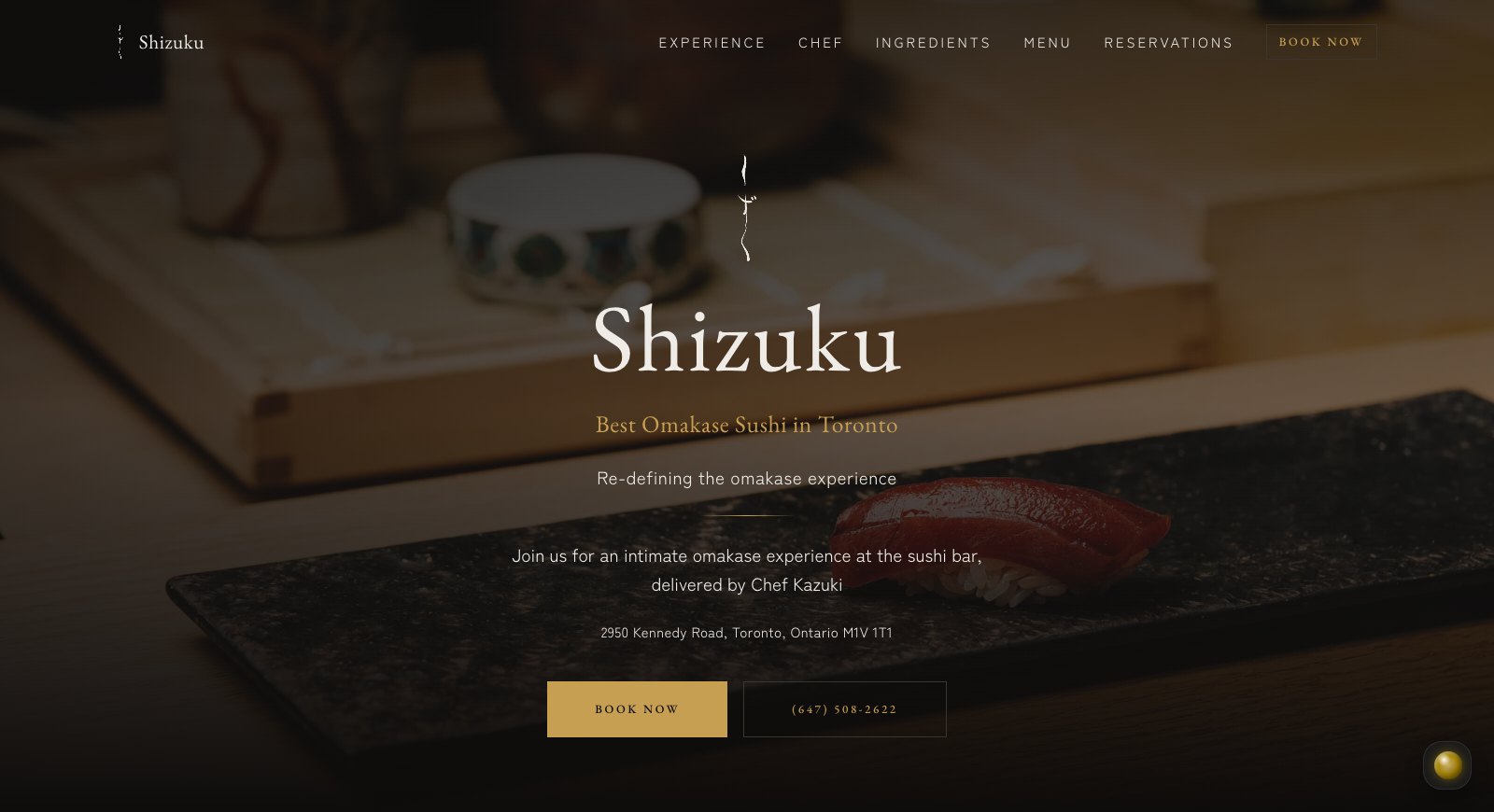
A ten-seat omakase counter on Kennedy Road, where the website has to filter as much as it sells. Every rule, price and course count stated plainly, and readable by the assistant a $295 dinner now gets researched in.
See the case study“The menu on the site is six months out of date and I keep meaning to fix it.”
The CMS makes a menu update feel like a project, so nobody touches it, and the site drifts away from the kitchen by the week.
“People keep calling to ask if we're open and what the hours are.”
Your hours and holiday closures are not written anywhere a machine can read them, so Google and ChatGPT answer from stale information found elsewhere, and the phone rings instead.
“We pay an agency a few hundred a month and I can't tell you what they actually do.”
The retainer buys a generic blog post and an Instagram repost. The menu pages, the allergen answers and the dish write-ups that would actually lift dinner-time search never get made.
“OpenTable books the table but the confirmation flow is somebody else's brand.”
Reservation handoffs leak the guest off-site before they've finished imagining the meal, and the post-confirmation email is the booking platform's brand, not yours.
“We're paying for delivery apps and the website does nothing for our own orders.”
DoorDash and Uber Eats take a cut on every cover that could have come through a direct order on the site, and the site doesn't even rank for the dish names that drive the queries.
Almost every restaurant site we replace does one job: it proves you exist. These are the four jobs it should be doing instead, and you can watch every one of them working right here.
Most restaurant sites give Google one page and a PDF menu, so there is almost nothing to rank. The top of the page ends up being a review site selling ads against your name. We give Google a real page for every part of your offer, with your hours, your neighbourhood and your dishes written where they can be read. That is the unglamorous half of this, and it is the half that fills tables on a Tuesday.
Illustration. The businesses are invented and the wording is ours, so nothing here claims a result we have not measured.
A growing share of your bookings start with a question typed into ChatGPT rather than a search box. The answer names two or three restaurants and explains why. Getting into that answer takes the same thing: your dishes, your style of service and your neighbourhood written down plainly enough to be quoted back.
Illustration. The business is invented and the wording is ours, so nothing here claims a result we have not measured.
People choose where to eat with their eyes, and a menu PDF has never made anyone hungry. Your photography is the strongest thing you own and it belongs at the top of the page rather than three clicks in. The front page we built for Mizu Temakase in Richmond Hill is at the top of this page.
Corkage, bookings, what is actually on the set menu, whether you can do shellfish-free. Your team answers these all night. An assistant on your own site answers them at the moment somebody is deciding. Then it hands them to the booking page, or takes their details for the floor manager. That is where a hungry visitor turns into a covered table.
Mock-up. A real one is briefed on your own prices, hours and policies, and sends the enquiry wherever you want it.
Monthly plan (search and AI work included at every tier)
Prices shown exclude applicable taxes.
See the full pricing and tier breakdownMizu Temakase is an intimate handroll omakase counter in Richmond Hill, Ontario, and the closest fit to what we ship for restaurants today. Hokkaido uni, otoro, engawa, hamachi, ikura, salmon, shiitake, kanpyo, avocado, each roll built one at a time in front of the guest. The brief was the one we hear most often from restaurants: how do we get AI engines to send us the table, and how do we look like the room we are without performing.
We rebuilt the site on a fast, modern build as an intimate single-page experience with the temaki lineup as the spine. Every handroll is written up as its own dish, the dinner-only hours are stated plainly, and the Richmond Hill location is unmistakable, so ChatGPT and Perplexity answer is Mizu Temakase open tonight correctly rather than guessing. The whole site loads in under a second.
The reservation block sits below the menu lineup rather than gating the experience, which is the inverse of how most restaurant sites are built. Buyers see the food, the room, and the story before they hit the booking link, which is the order they actually want. The reservation volume has shifted from Google Maps as the primary entry point to an increasing share of AI engines naming the restaurant by name on neighborhood omakase queries, which is the citation pattern we built the site to compound.
The same same menu and dish groundwork ranks twelve dish-detail pages, twelve menu-variant pages, or twelve neighborhood-and-occasion combinations on a larger restaurant. The reason restaurants don't show up in AI Overviews today is that the average restaurant website is still a Squarespace template, a menu PDF, and an OpenTable widget. That groundwork isn't there, the dish names cannot be read, the dietary data lives inside a photo. The Mizu build is the proof of what changes when that stack gets rebuilt for 2026.
Free audit
You hand us your web address and we send back a scored report: how fast the site loads on a phone, whether Google and ChatGPT can actually read it, how often they mention you today, and the gap between what you have and what restaurants and cafes need to show up in 2026. A web address is all we need.
Honest pricing for a restaurant website with real menu pages, dish pages, and booking wired in. Build tiers from $2,500, monthly plans from $300.
Read the guideHow your restaurant gets named when somebody asks ChatGPT or Google where to eat: real menu pages, a page per dish, and answers to what people actually ask.
Read the guideWe build and rank restaurants and cafes sites across Canada and the UK. Our Toronto page goes deep on the local market; for any other city, tell us on the audit and we tailor the build to it.