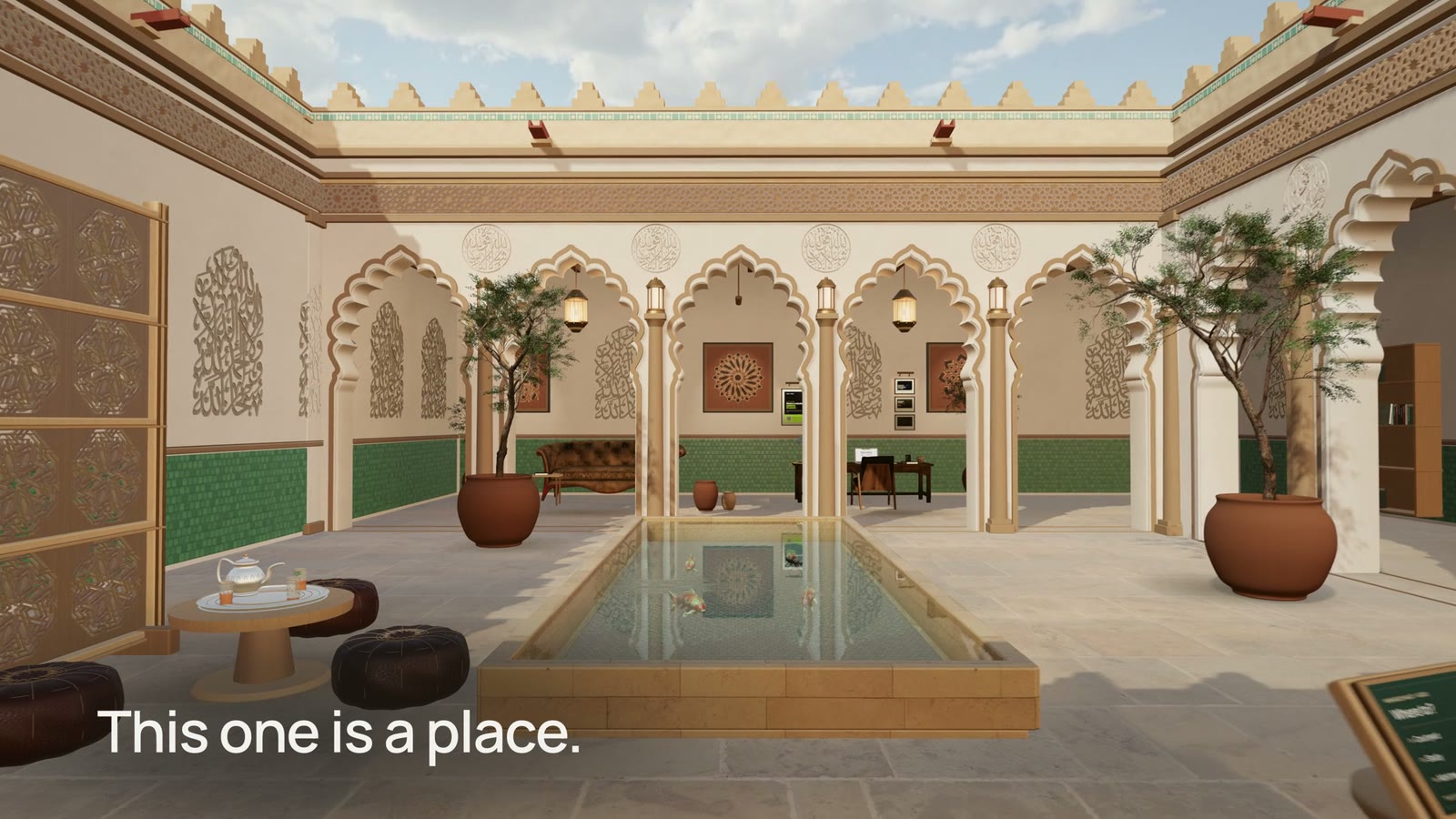
I built a portfolio you can walk through.
It is a digital riad: a courtyard, a gallery for my geometric art, a study for Space & Story and a workbench for XYspace. There are books to open, koi in the pool and mint tea to pour. The work has a place in the building, and you can decide where to go next.
You can enter the live riad or watch the one-minute film before you explore.
A place for the different parts of my work
I make layered artwork based on Islamic geometry. I also build websites through Space & Story and work on software through XYspace. Those practices already sit beside each other in my life. The riad brings them into the same space on the web.
The architecture gives the portfolio a simple structure. You arrive in a courtyard. The gallery is one direction; the studios are another. You can follow a guided visit or walk around yourself.
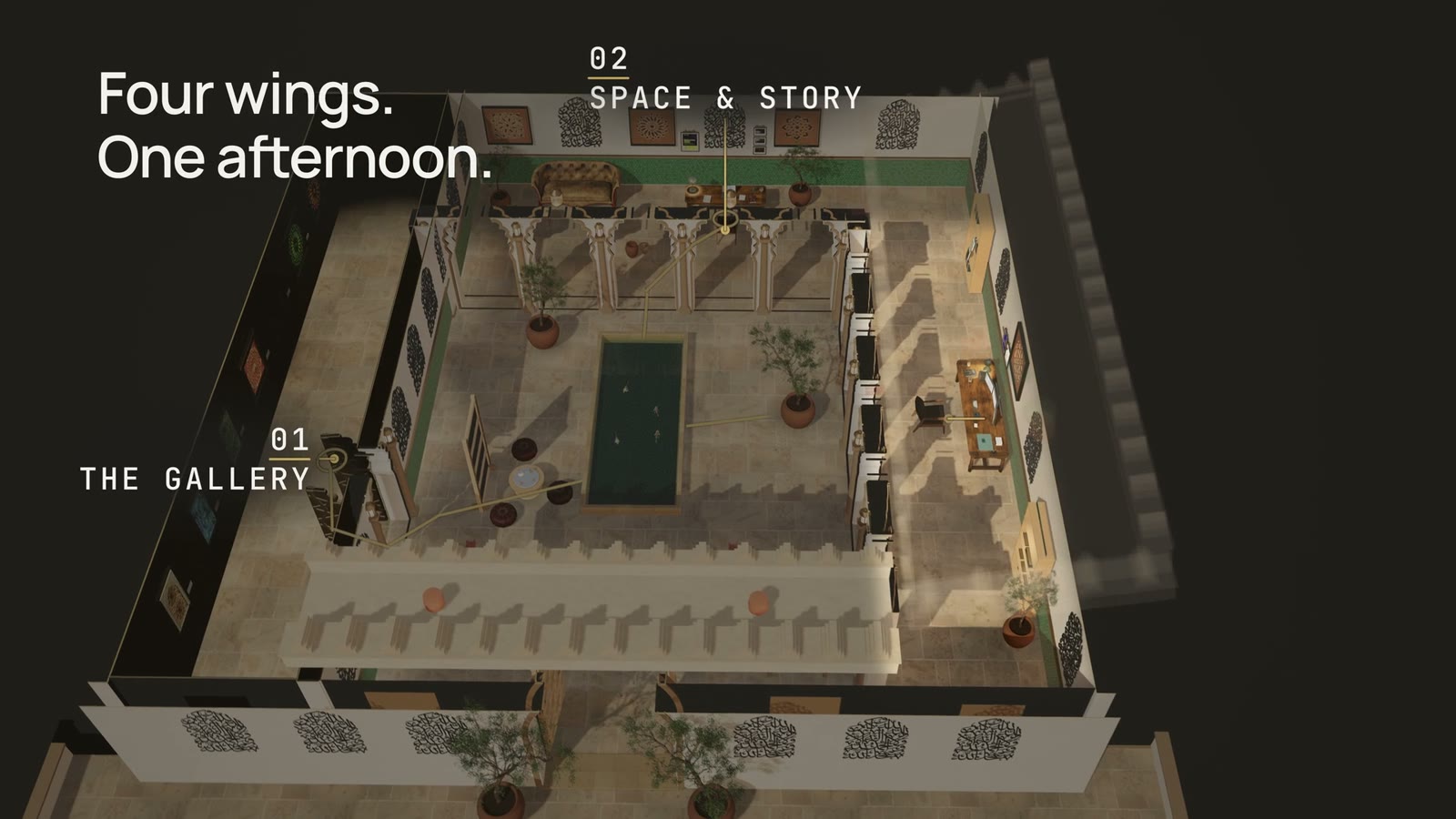
The courtyard also leaves room for the things that do not fit neatly into a project card: the books, the materials, the relationship between the art and the studio work. You can stop and look without immediately being sent to the next section.
The artwork had to remain my artwork
The gallery holds all seven originals from my Halat Arabesque collection. The scene uses the real cut outlines and colours from those works, with separate layers and visible depth. The digital versions keep each work’s proportions.
That matters for pieces such as Moroccan Arch and Arabesque Water. Their construction is part of the work. A flat image shows the pattern; light across the cut edges shows how it is built.
The gallery has dark walls, thin frames and a moving raking light. The light is restrained enough to let the layers do the work.
The carving studio is part of the visit too. It opens the actual interactive application from the gallery, and closing it returns you to the room.
The studios are rooms with real work in them
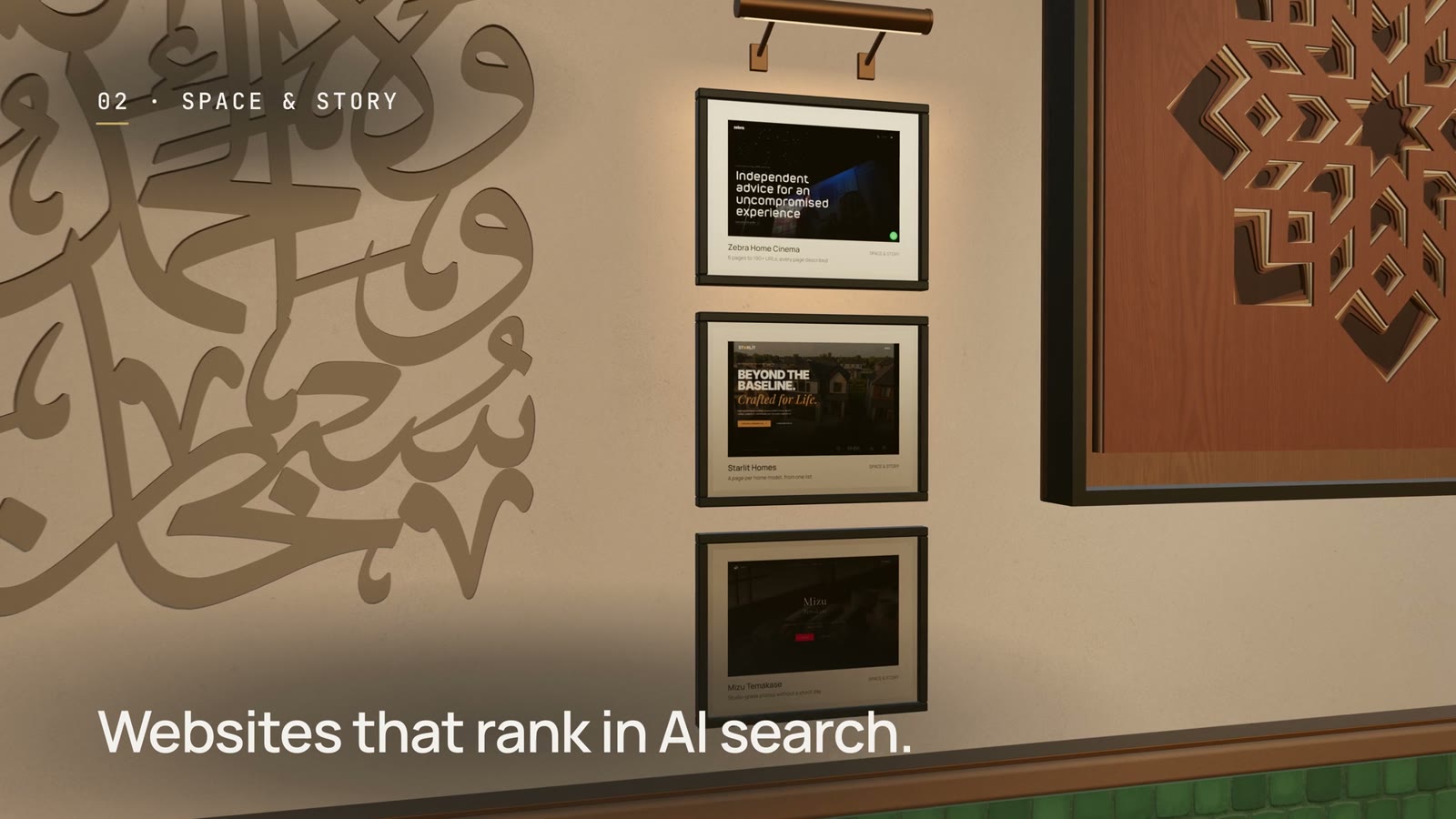
Space & Story has a study. XYspace has a workbench. The screens and framed pieces refer back to the websites, products and experiments behind each studio.
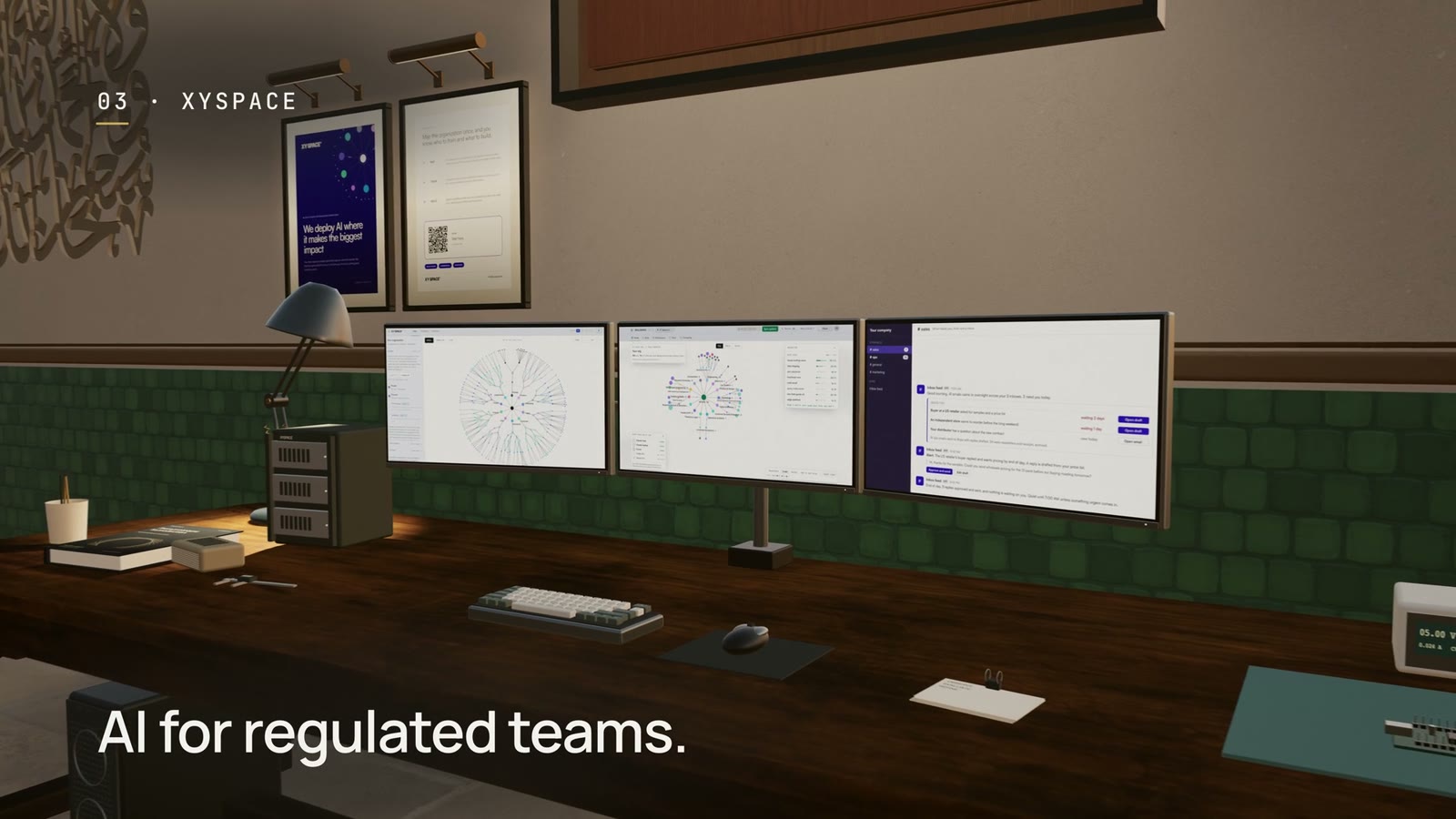
In the XYspace wing, a three-monitor desk sits alongside electronics tools and books. The screens show selected product work. There are links out to the actual projects, so the room is an introduction rather than the end of the visit.
Small interactions give you a reason to stay
The doors open. The books can be read. Tapping the water sends the koi away before they settle back into their paths. The tea pot rises to pour into a glass.
These are small things, but they give the courtyard a different pace from a scrolling page. You can move through quickly, or spend time with a detail.
The same scene also changes from afternoon to evening. The sky darkens, the lamps become more visible and the materials take on a different warmth.
A walkable website still has to be usable
The scene is built with Three.js. That gives me control over geometry, light and movement, but it also means the browser has more work to do than it would on a conventional portfolio.
The project uses shared geometry, compressed assets, reduced texture sizes where appropriate and rendering that pauses when the scene is hidden. Reduced-motion settings skip the entrance and guided travel animations and stop ambient motion.
There is also a text-first portfolio index. It gives visitors a direct route to the art, studios and writing without needing to navigate a 3D scene. The experiment should offer another way to see the work, while keeping the work easy to reach.
Come in and look around
The riad brings my art and studio work into a single place. It is also an experiment in how much of a person’s practice a website can hold when the structure comes from the work itself.
Explore the Riad, watch the film and excerpts, or go straight to the original artwork.
Concept, original artwork and development by Mahmoud Halat. All images here are captures from the digital Riad project and its launch film. The scene incorporates material scans, furniture and the Clarens Midday panorama from Poly Haven (CC0), and the Koi Fish model by 7PLUS, adapted under CC BY 4.0. Original Halat Arabesque artwork © Mahmoud Halat.