Shizuku is a ten-seat omakase counter on Kennedy Road in Toronto. Twenty-two courses, two and a half hours, one chef working an arm's length from you. The room serves fewer people in an evening than a normal restaurant turns in an hour, which changes what a website is for. You are not trying to fill a dining room. You are trying to fill ten seats with the right ten people.
So the site has to filter as much as it sells. Omakase asks a guest to give up every choice except the date. No substitutions, a fixed run of courses, a $100 deposit per seat, a cancellation window measured in days. Arrive on time, because a late seat gets an abbreviated menu. Skip the cologne, because it sits between you and the fish. Every one of those is a reason for the wrong guest to walk away and the right one to book with confidence. We put all of it on the page, in full, instead of hiding it behind the booking widget where it turns into a surprise at the counter.
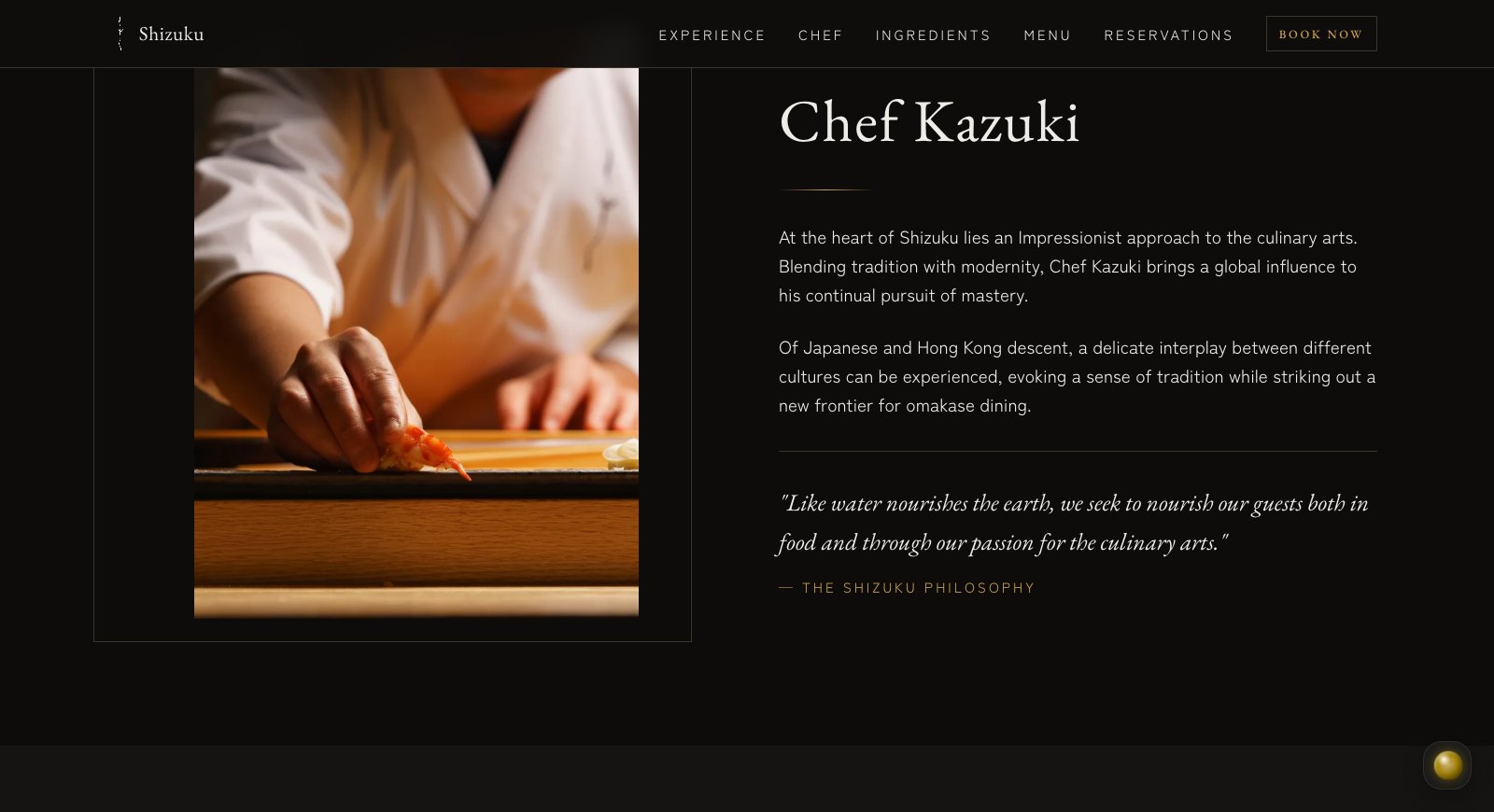
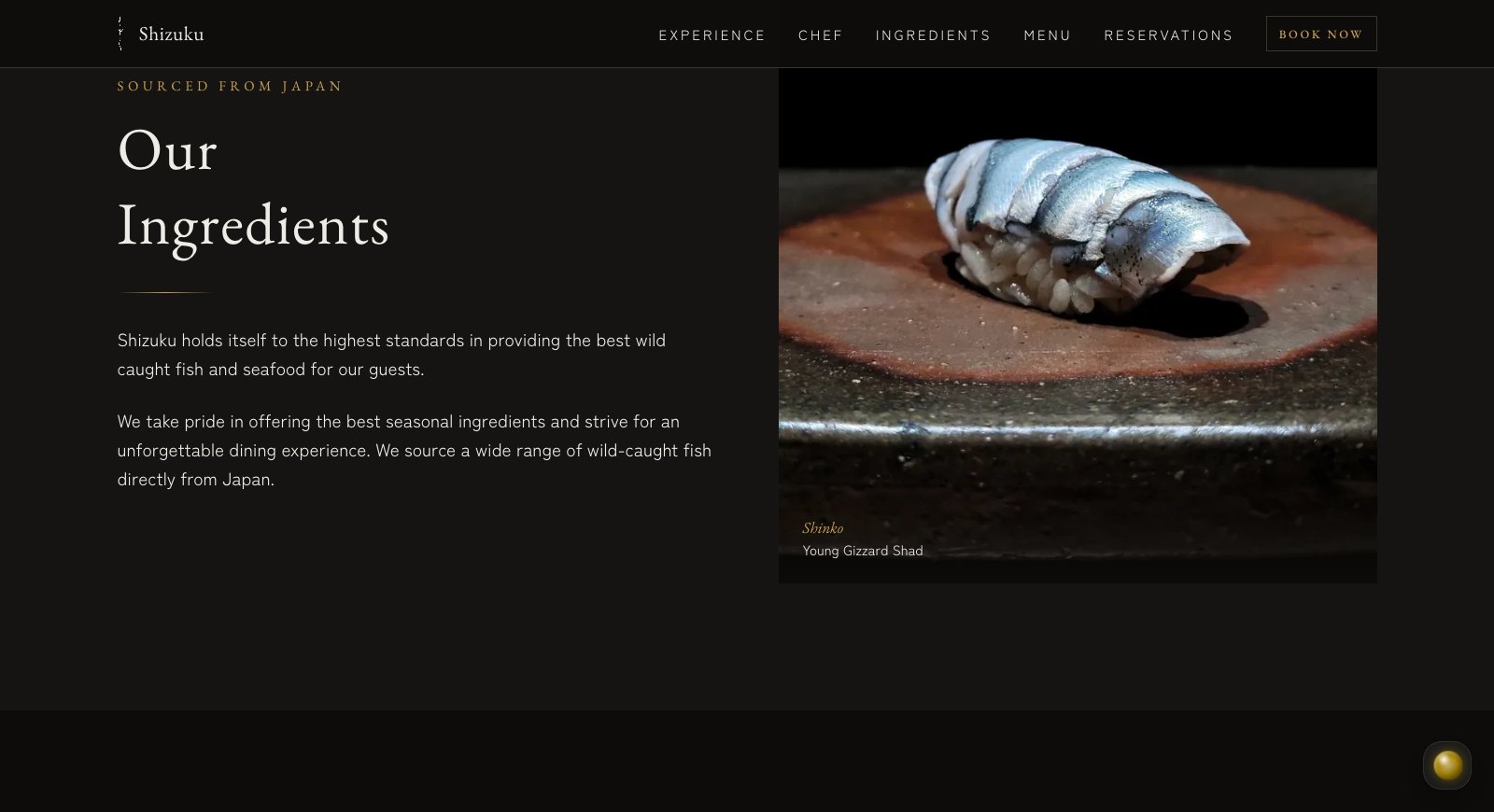
The design gets out of the way of the food. Near-black background, a serif display face, gold rules, and photography given room to be the only thing on screen: a single piece of shinko on a clay plate, the chef's hands mid-form. The copy is short enough to read standing at a subway platform, which is where half of it will be read. Omakase means "I'll leave it up to you"; shizuku means water droplet. The site says both once, quietly, and then stops explaining itself.
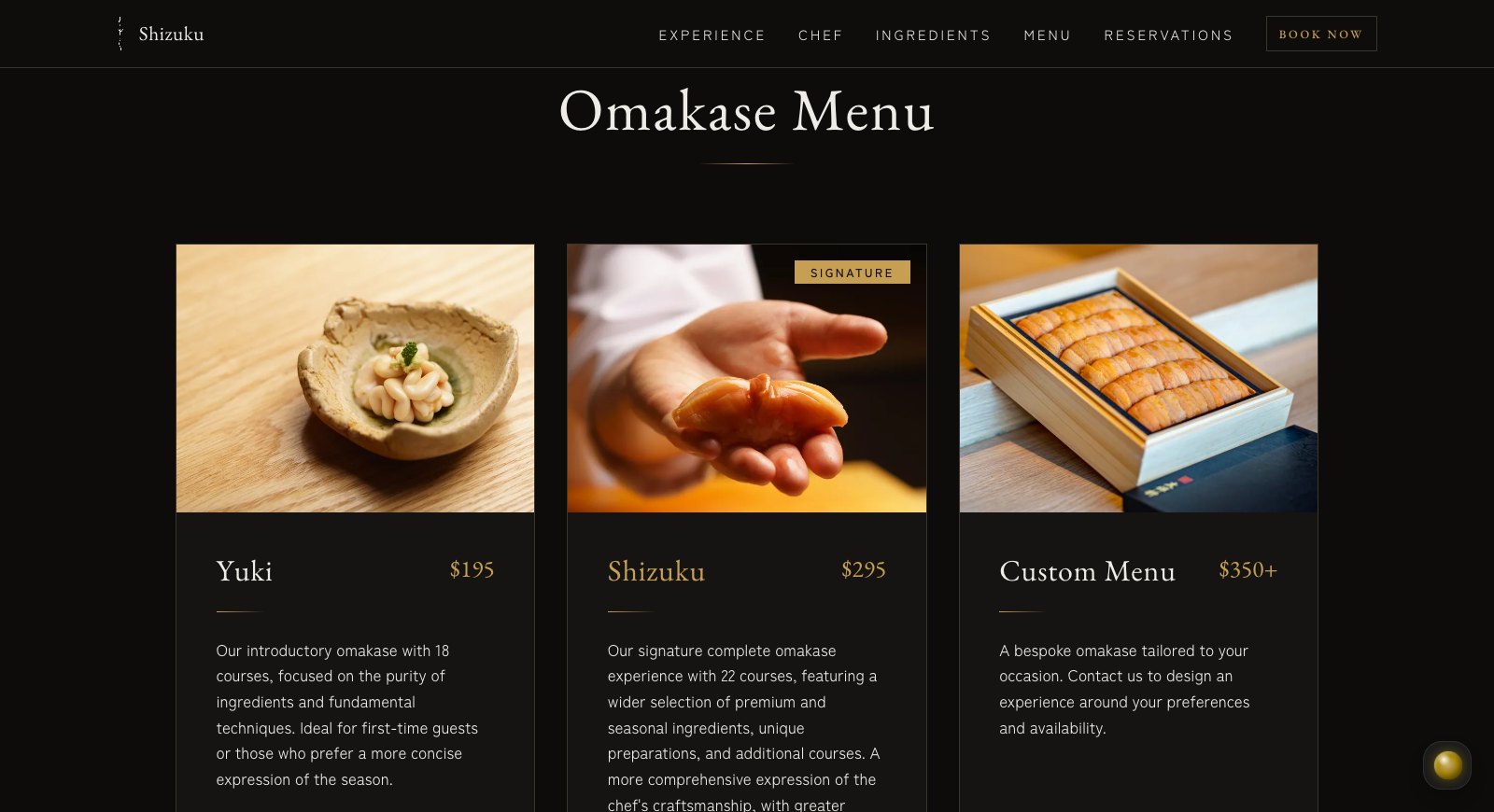
The menus are the part that had to be machine-readable. Yuki at $195 for eighteen courses, the signature Shizuku at $295 for twenty-two, a bespoke menu from $350, and the seasonal runs like Shun, $225 for nineteen courses over one week in October. Each one is written as its own object with its course count, price and sake pairing, in Menu schema rather than a PDF. The Restaurant schema carries the address, the price band, the OpenTable link, and the actual service hours, so an assistant asked "is Shizuku open Wednesday" answers no instead of guessing. A past-events page keeps the retired seasonal menus at a permanent address, so the Uni celebration and the Ginrin hikarimono run stay findable long after the Instagram post scrolls away.
That last part is the whole bet. A diner deciding where to spend $295 a head does not start on Google Maps any more; they ask an assistant for the best omakase in Toronto and take the three names it gives them. Most restaurant sites hand that assistant a hero image, a phone number, and a menu locked in a PDF. This one hands it every course count, every price, every rule and the hours. That is the difference between being one of the three names and being invisible at the exact moment someone is ready to book.