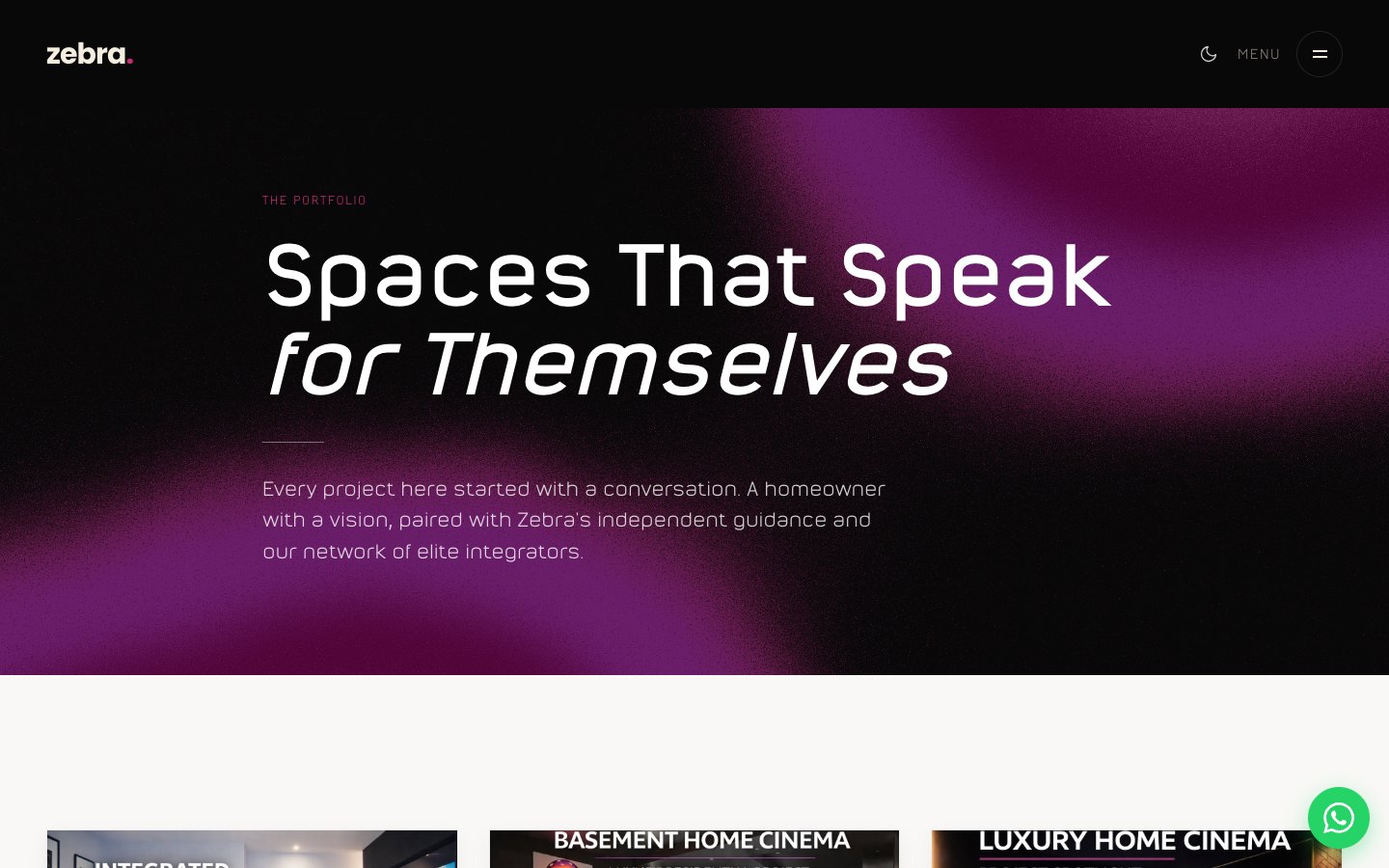
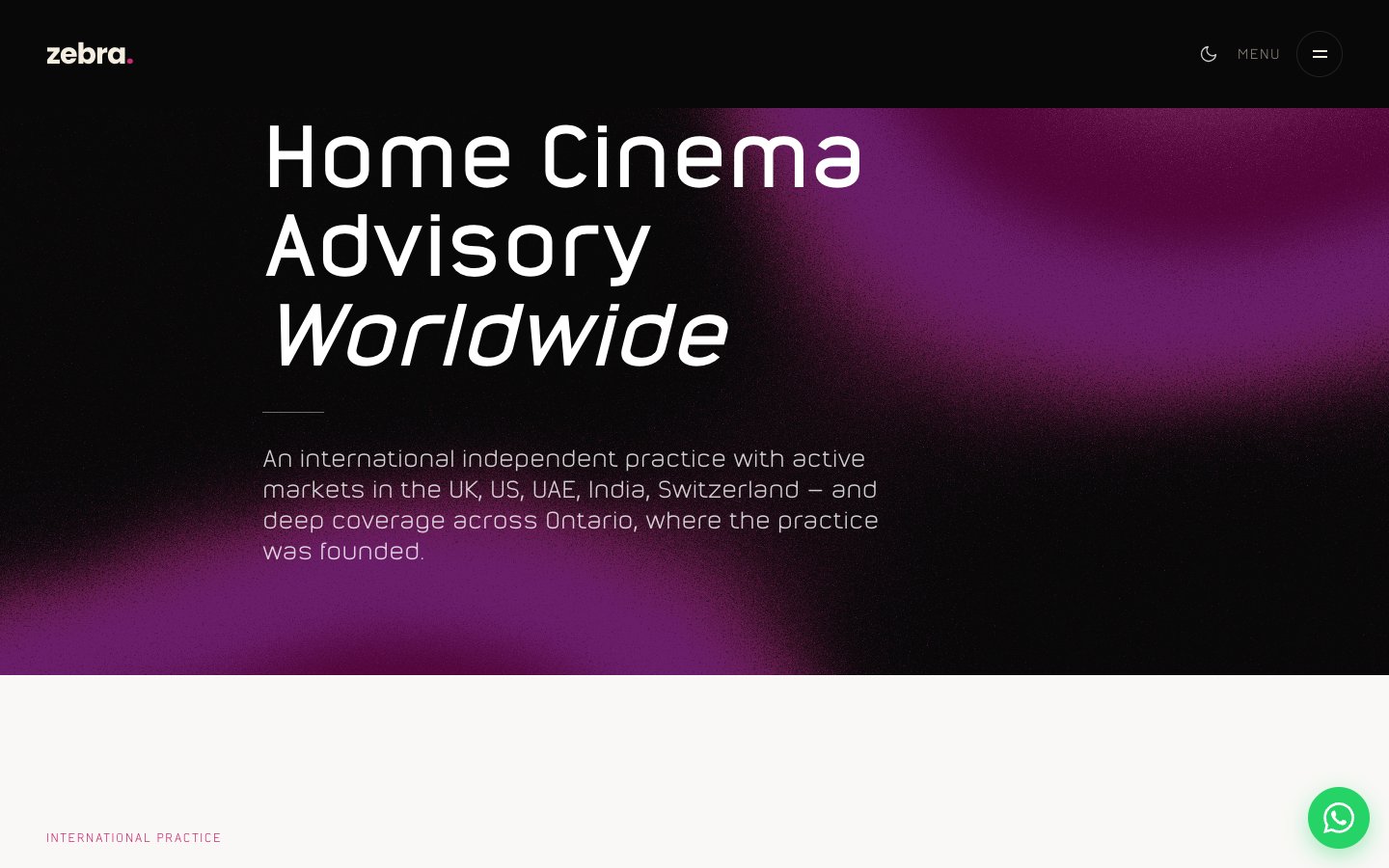
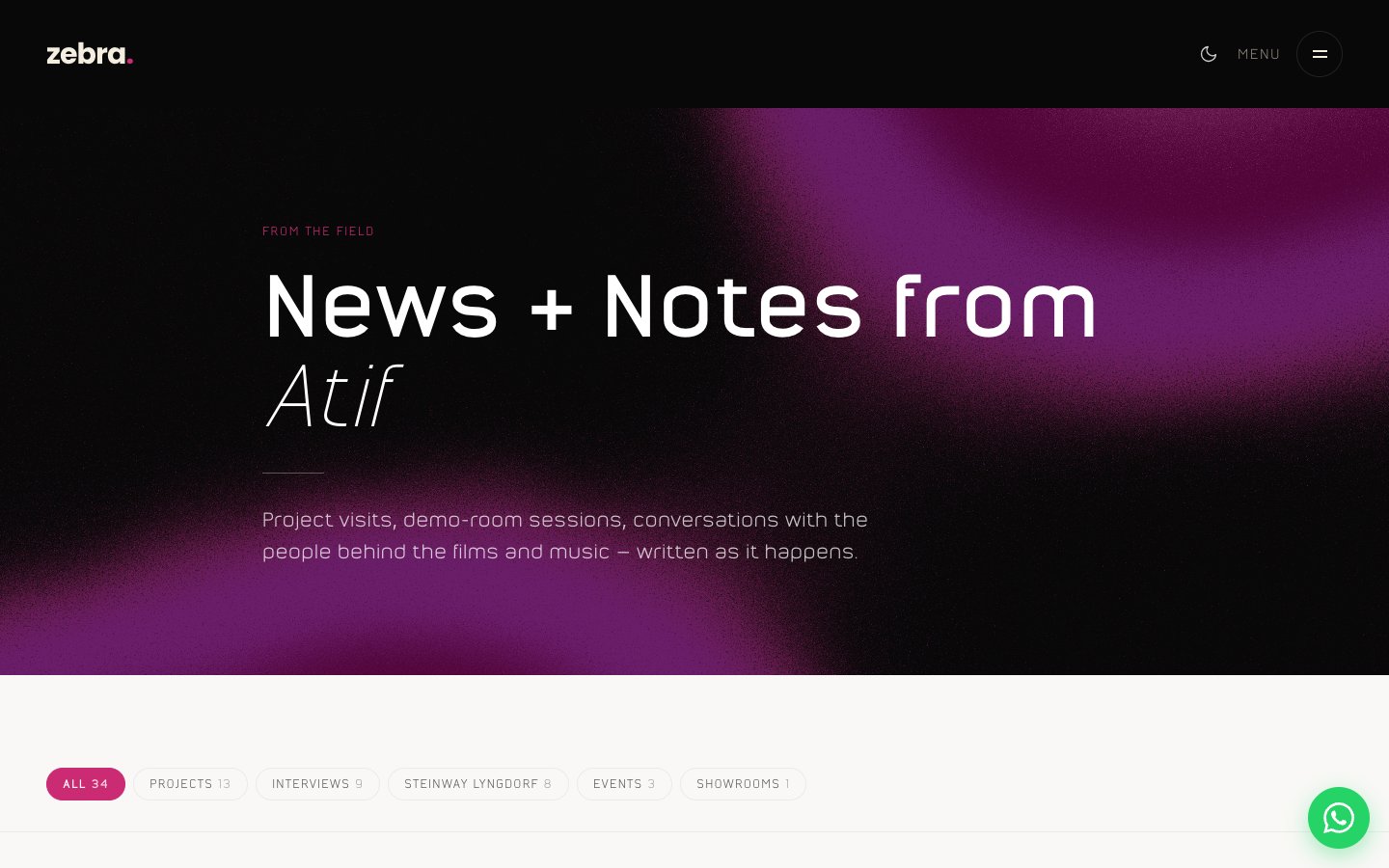
Zebra Home Cinema designs and installs luxury home cinemas, media rooms, landscaped entertainment spaces, music systems, and full smart-home integrations for high-end residential clients. They run two offices, Hardwick Lodge near Little Aston in the UK and the Lakhouse on Dunlop Street East in Ontario, and the brief was to make a luxury installer's website compete on page count and AI visibility without making the brand look like a volume operation. The old site was six static pages on WordPress, with the kind of problems that read like a checklist of everything a 2026 site should not be: no H1 on the homepage (which is a critical failure most agencies miss), no page descriptions, none of the groundwork, no preview images when a link was shared, no sitemap, no blog. The page count was the whole problem, and the absence of structure on top of it was the rest.
We rebuilt it on current tooling we maintain ourselves, with the animation work and Sharp handling image optimization at build time so a hero shot of a Steinway-grade install actually loads in under a second on mobile. The share-image pipeline is the part that quietly does the most work: it generates a 1200x630 preview caraph images on the fly for every page, so when somebody pastes a Zebra URL into a WhatsApp thread or a LinkedIn message, the preview card looks like a piece of marketing collateral instead of a default favicon. Across the build that's 190+ preview images, one per page.
The structural lift is the part the founder cared about most. The site went from 6 pages to roughly 26 static pages, 96 blog posts, 46 news posts, and 22 service-area city pages, which is 190+ total URLs and a 32x increase in surface area. The 22 city pages are the generated part of the build, produced from one list the same way Starlit's model pages are generated, with each city in their service area getting its own page about home cinema installations in that location, with its own detail, its own titles and a local opening. The 96 blog posts cover the long tail of what a luxury AV buyer actually asks before signing a contract: room acoustic treatment, projector versus television trade-offs at different room sizes, lighting integration with Lutron, the difference between a Steinway system and a JBL Synthesis system, calibration philosophy. The 46 news posts are press, project completions, and behind-the-scenes content from the Spotlight YouTube series.
Underneath, every part of the site is described in the form search engines read. The blog and news posts, the questions answered on the service and city pages, the video on the Spotlight content with its running time and thumbnail, real profiles for the installer team, and the company itself as the spine. Most luxury installers do none of this and rely on word-of-mouth, which works at small scale and breaks the moment the buyer starts their research with ChatGPT or Perplexity instead of a referral from a friend. The site is fast on a phone throughout. The brand is now quotable in AI engines for queries about home cinema design and installation across the regions Zebra operates in, which is the whole point.
We were figuring the share-image pipeline out as we went, in fairness. Generating 190+ of them is a different problem from generating 10, and the second iteration of the build script is meaningfully faster than the first. The site is the proof that a luxury installer can carry the same depth of content and structural rigour as a mass-market player without the brand reading as a volume operation, which was the brief and the result.