
Why This Matters for Enterprise AI
A demo agent and a production agent solve the same task. The difference shows up on the invoice. In a demo, nobody counts tokens, nobody clocks latency, and a single request can call the most expensive model six times without anyone noticing. Run that same agent across ten thousand users a day and it becomes a line item that gets your project killed.
Resource optimization is the discipline of making an agent cost- and latency-aware so it stays viable at scale. It is the least glamorous pattern in the series and the one that most often decides whether an agent ships. A clever architecture that costs $4 per task is a science project. The same task answered for nine cents, in two seconds, is a product. This post is about closing that gap, and it picks up where monitoring AI agents left off: once you can measure cost and latency per task, you can start to control them.
What Resource-Aware Agent Design Means
A resource-aware agent treats compute, money, and time as constrained inputs it has to manage, not infinite resources it can spend freely. Antonio Gulli, in Agentic Design Patterns, frames this as the operational layer of agent design: the patterns that govern how an agent allocates its limited budget across the steps of a task.
In practice it comes down to five levers, and most production agents pull all of them:
- Budgeting. Cap the tokens, dollars, or tool calls a single task may consume, and enforce the cap.
- Model routing. Send easy steps to a cheap fast model and hard steps to a strong expensive one.
- Caching. Never pay twice for the same answer, whether that means caching a static prompt prefix or a whole response.
- Early stopping. Stop the moment the answer is good enough, instead of running every step you planned.
- Explore versus exploit. Decide how much of the budget to spend searching for a better approach versus committing to the one that already works.
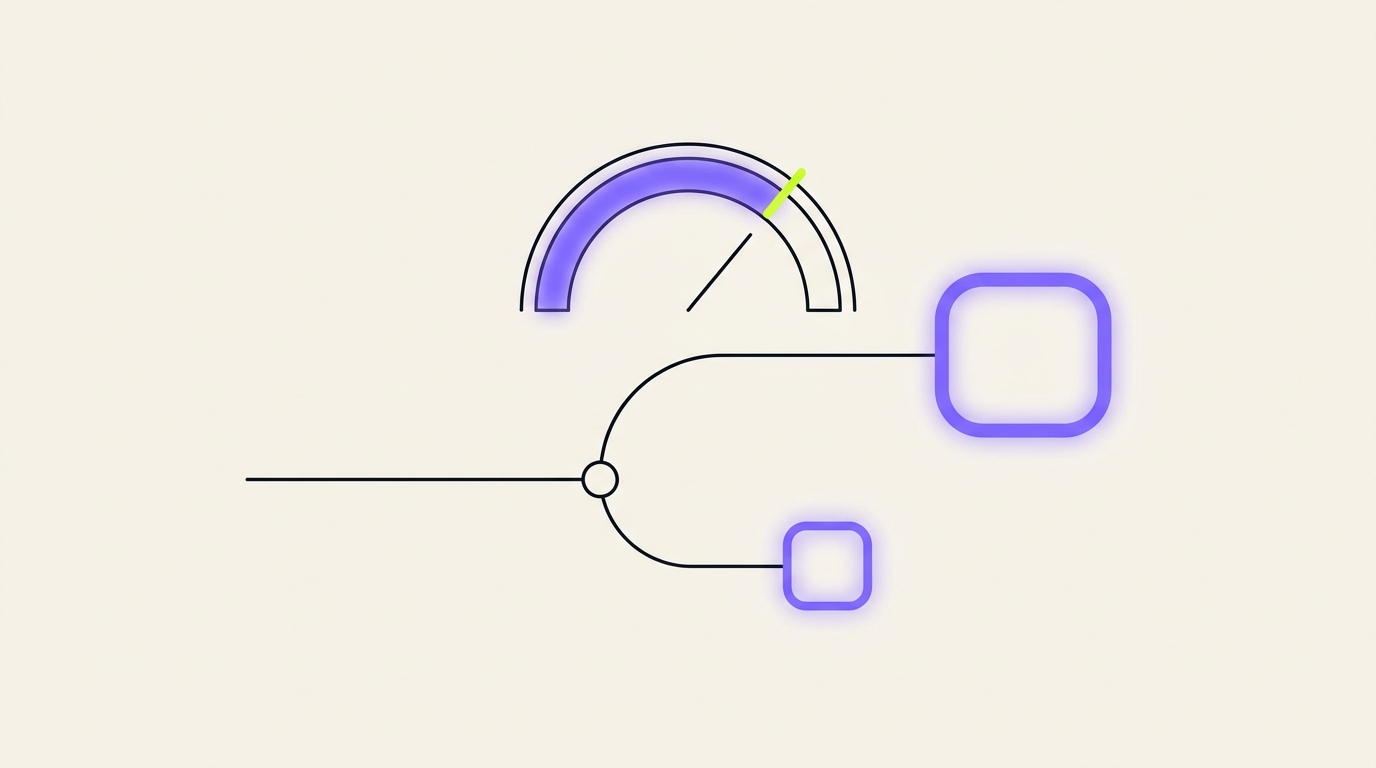
The mental model is a household budget, not a blank check. You do not buy groceries at the price of a steak dinner, and you do not answer "what is the capital of France" with a frontier reasoning model running at maximum thinking budget. Resource optimization is the agent learning to shop.
How Cost-Aware Routing Works
Model routing is the lever with the biggest payback, so start there. The premise is simple: tasks vary in difficulty, and so does model pricing, but a naive agent ignores both and sends everything to one model. Pricing spans more than an order of magnitude across a single provider's lineup, which means matching model strength to task difficulty is often the single biggest cost win available.
A router sits in front of the model call and answers one question for each step: how hard is this step? An easy classification, a format conversion, or a short extraction goes to a small fast model. A multi-step reasoning problem, an ambiguous judgment call, or a high-stakes draft goes to the strong model. The routing decision itself should be cheap, often a heuristic or a tiny classifier, because a router that costs as much as the call it is routing defeats the purpose.
This is the same impulse behind routing and parallelization, pointed at economics instead of throughput. There, routing picks the right path through a workflow. Here, it picks the right model for a step. The mechanism is identical; the objective function is cost.
A Budget Guard in Practice
The companion to routing is a hard budget. Routing lowers your average cost per task; a budget guard caps your worst case. Without one, a single pathological request (an agent that loops, retries, and re-reasons its way into a hole) can cost a hundred times the median. The guard is what lets you sleep.
Here is an abbreviated cost-aware router with a per-task budget cap. It estimates difficulty, routes to the cheap or strong model accordingly, and refuses to start any step it cannot afford.
# Abbreviated — illustrative cost-aware router + budget guard, not production code
PRICES = {"haiku": 0.80, "sonnet": 4.00} # USD per million output tokensclass BudgetExceeded(Exception):
pass
class BudgetedRouter:
def __init__(self, llm, cap_usd: float):
self.llm = llm
self.cap_usd = cap_usd
self.spent_usd = 0.0
def _pick_model(self, step) -> str:
# Cheap heuristic: hard steps go to the strong model.
hard = step.get("needs_reasoning") or len(step["prompt"]) > 4000
return "sonnet" if hard else "haiku"
def _estimate_usd(self, model, max_tokens) -> float:
return PRICES[model] * max_tokens / 1_000_000
def run(self, step, max_tokens=800):
model = self._pick_model(step)
projected = self.spent_usd + self._estimate_usd(model, max_tokens)
if projected > self.cap_usd:
raise BudgetExceeded(f"step would exceed cap of {self.cap_usd} USD")
result = self.llm.call(model, step["prompt"], max_tokens=max_tokens)
self.spent_usd += self._estimate_usd(model, result.output_tokens)
return result
The same shape holds in any framework. LangGraph and Google ADK let you attach a routing function before a model node and track accumulated cost in shared state; the pattern does not change, only the plumbing does.
Caching: Never Pay Twice
Caching is the cheapest performance win in agent design because the work is already done. Two kinds of caching matter for agents.
Prompt caching stores the model's processing of a static prefix (a long system prompt, a tool schema, a retrieved document) so repeat calls skip re-reading it. The savings are real and large. Anthropic's prompt caching charges cache reads at roughly a tenth of the base input price, a 90% discount on the cached portion of every request. For an agent that reuses the same 5,000-token instruction block on every step, that is most of your input cost gone.
Semantic or response caching goes a level up: it caches whole answers and serves them for queries that are semantically the same, not just byte-identical. A support agent answering "how do I reset my password" and "I forgot my password, what now" should not pay for two separate generations. An embedding-similarity check in front of the model catches the duplicate and returns the stored answer in milliseconds for a fraction of a cent.
The two work together because prompt caching cuts the cost of the calls you do make, while semantic caching cuts the number of calls you make at all. Together they routinely take a chatbot's per-query cost down by half or more, with the added benefit that a cache hit returns far faster than a fresh generation.
Enterprise reality: A customer-support agent handling 50,000 questions a day will see the same two hundred questions over and over. Routing the long tail to a strong model while serving the head from a semantic cache is the difference between a support bot that pays for itself and one that finance shuts down at the next budget review. The cache is not an optimization you add later; it is the business model.
Early Stopping and Knowing When to Quit
A planned agent often lays out more steps than it ends up needing. Early stopping is the discipline of checking, after each step, whether the answer is already good enough, and quitting if it is.
This connects directly to prompt chaining, where a task runs as an ordered pipeline of steps. A naive chain runs all of them every time. A resource-aware chain treats each step's output as a candidate answer and asks a cheap question: is this confident enough, complete enough, or high-enough quality to ship? A retrieval step that already surfaced the exact answer does not need three more rounds of refinement. A draft that passes a quality check does not need a fourth revision pass.
The trick is making the stopping check cheaper than the step it skips. A confidence threshold, a regex that confirms the output is well-formed, or a one-token "good enough?" classification all work. The moment your stopping logic costs more than the work it saves, you have over-engineered it. That is the same over-decomposition trap that haunts prompt chaining, wearing a different hat.
The Explore-Exploit Tradeoff
The deepest resource decision an agent makes is how to spend its search budget. When an agent can attempt a task several ways (different prompts, different tools, different reasoning paths) it faces the classic explore-versus-exploit tension borrowed from reinforcement learning.
Exploit means committing budget to the approach that has worked before. It is reliable, cheap, and predictable, and it never discovers anything better than what you already have. Explore means spending budget trying alternatives that might be worse but might be much better. It is how an agent improves, and it is how an agent wastes money on dead ends.
A resource-aware agent does not pick one. It tilts the balance based on stakes and budget remaining. For a cheap, frequent, low-stakes task, exploit hard: run the known-good path and move on. For a high-value task with budget to spare, allow some exploration: sample a few approaches, keep the best, and remember which one won so the next run can exploit it. The pattern that turns exploration into a permanent gain is feedback: an agent that logs which approach succeeded for which task type slowly converts expensive exploration into cheap exploitation. That loop is where monitoring and optimization meet.
When to Optimize (and When Not To)
Resource optimization is not free. Every lever adds code, and code adds bugs and latency. Spend the effort where it pays back.
- Optimize when volume is high. A pattern that saves two cents per task is worth building at a million tasks a day and pointless at fifty.
- Optimize when one model is doing work a cheaper one could handle. If your agent sends trivial steps to a frontier model, routing pays for itself almost immediately.
- Optimize when the same inputs or queries repeat. High prefix reuse means prompt caching; high query overlap means semantic caching.
- Optimize when a runaway task could blow the budget. A budget guard is cheap insurance against the long-tail request that costs a hundred times the median.
Skip it in the other direction.
- Skip premature optimization on a low-volume internal tool. If the agent runs a hundred times a day, your engineering hours cost more than the tokens.
- Skip routing when the task needs the strong model on every step anyway. Downgrading quality to save pennies on a high-stakes task is a false economy.
- Skip caching when answers must be fresh or personalized. A stale cached response to a query about live data is worse than an expensive correct one.
The honest test is whether the optimization buys more than it costs to build and maintain. Measure first, since the monitoring layer tells you where the money goes, then optimize the line items that dominate the bill and leave the rest alone.
Key Takeaways
- Resource optimization makes an agent cost- and latency-aware, which is what separates a viable product from a money pit at production scale.
- Model routing has the biggest payback: send easy steps to a cheap fast model and hard steps to a strong one, since pricing spans more than an order of magnitude.
- A hard budget guard caps your worst case, protecting you from the runaway task that costs a hundred times the median.
- Prompt caching cuts the cost of the calls you make (cache reads run about 90% cheaper), and semantic caching cuts how many calls you make at all, so use both.
- Early stopping quits when the answer is already good enough, and the explore-exploit tradeoff governs how much budget to spend searching for something better: tilt toward exploit for cheap frequent tasks, and explore only where stakes and budget justify it.