On May 7, 2026, Google stopped showing FAQ rich results in Search. The accordion of questions that used to sit under your listing, the extra space, the click-through bump: all gone. The feature that launched a thousand "add FAQ schema for more SERP space" posts disappeared without an explanation from Google.
FAQ schema, the FAQPage structured data that marks up a list of questions and their answers so machines can read them, now matters more than it did when the rich result was alive. It just matters for a different reader: not Google's blue links, but the AI systems that answer a growing share of your audience's questions before anyone reaches a results page.
Most FAQ schema guides still sell you the dead feature. This one covers the live one. I will go through what changed and what large language models actually do with your FAQ schema, which is not what most vendors claim. Then I will show, with working code, how to implement FAQPage schema so ChatGPT, Perplexity, and Google's AI Overviews pull your answers into theirs.
The feature everyone optimized for is gone
The timeline explains why so much published advice is now wrong.
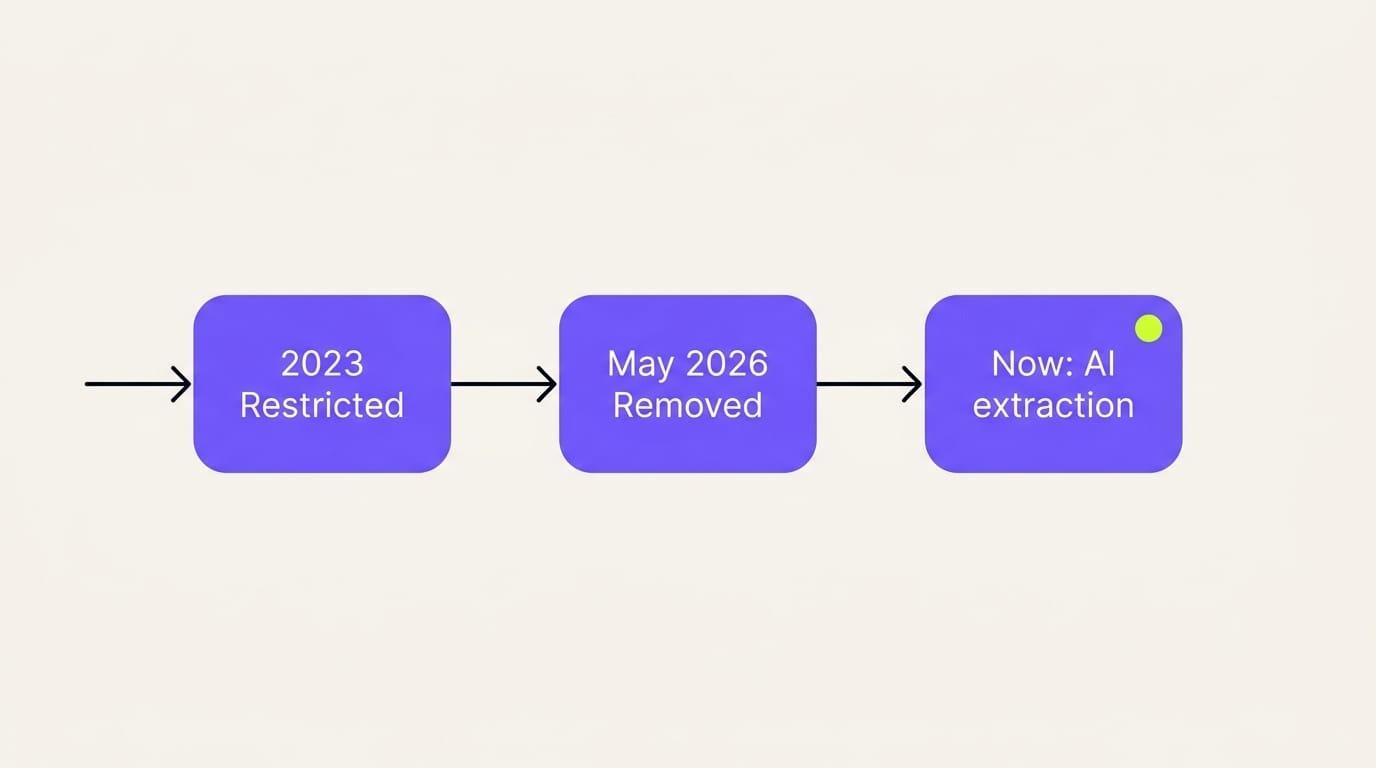
In August 2023, Google restricted FAQ rich results to "well known, authoritative government and health websites." The rest of us lost the SERP feature overnight. Most people missed it, because the schema stayed valid and the markup kept validating clean.
Then on May 7, 2026, Google removed them for good. FAQ rich results stopped appearing for everyone. The tooling is being retired on a schedule: the Search Console rich result report and the Rich Results Test drop FAQ support through June 2026, and the Search Console API ends its FAQ support in August 2026. Google added a deprecation notice to its docs and said nothing more.
Your existing FAQ schema is not a problem, though. Google has long held that unused structured data does not hurt a page, and FAQPage is still a valid Schema.org type. You do not need to rip it out. You need to know what it does now.
So why does FAQ schema still matter?
Because the question-and-answer format is the most extractable shape of content on the web, and extraction is the whole game in AI search. A clean FAQ schema hands the machines a running start.
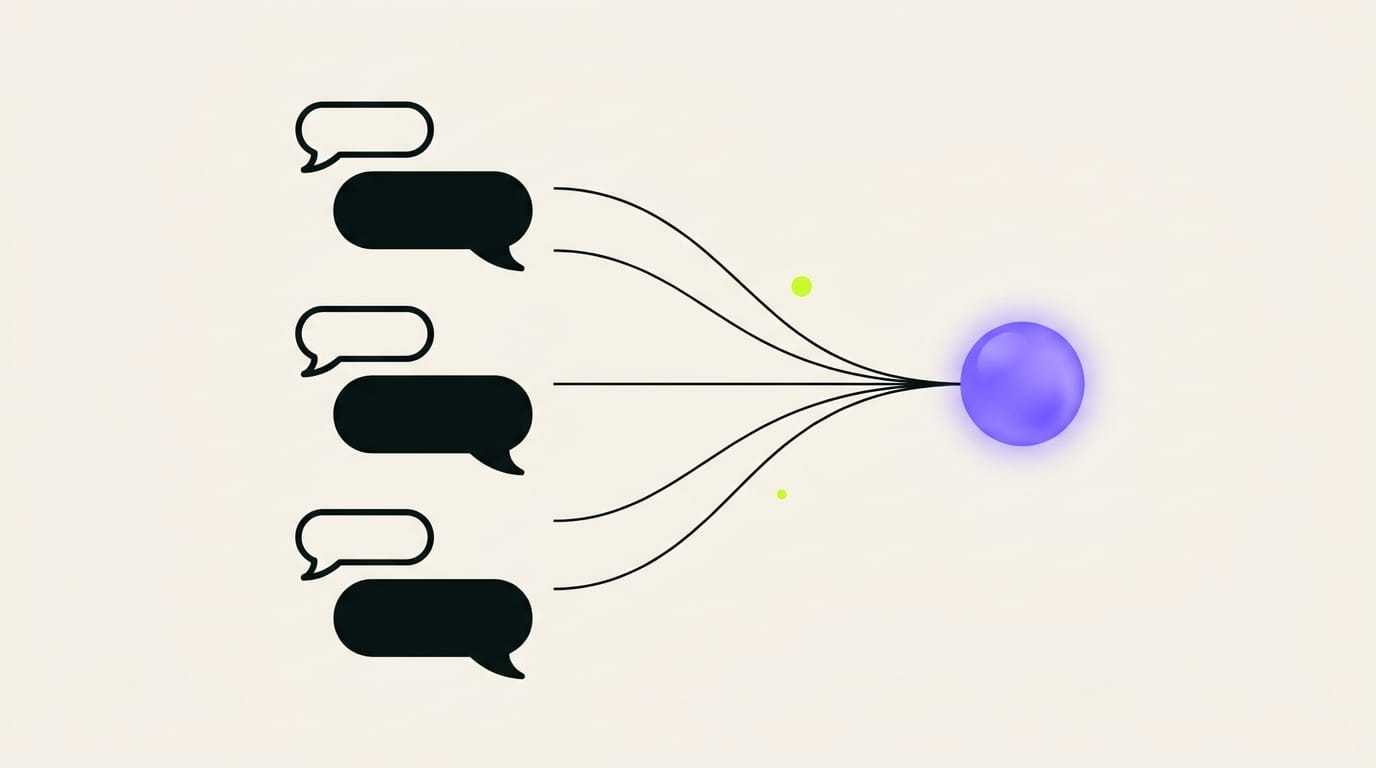
When someone asks ChatGPT or Perplexity a question, the system does not read your page the way a person does. It reads in fragments, breaking the text into chunks, ranking them for relevance, then stitching the strongest ones into an answer with citations. A question followed immediately by its answer is already shaped like the output it wants, so you have done the chunking for it.
That is why FAQ schema content shows up so often in AI answers, and the reason is the structure rather than anything in the markup itself. The gap between those two is where almost every FAQ schema guide goes wrong next.
What AI actually does with your schema
Large language models do not parse your JSON-LD as structured data. They read it as text.
Schema markup is built to be machine-readable in a formal sense, a labeled set of key-value pairs a parser can interpret, and Google's traditional systems use it that way. LLMs do not. When a model tokenizes your page, the JSON-LD inside your <script> tag becomes just another stretch of words in the input, no more privileged than a paragraph.
In February 2026, the search researcher Mark Williams-Cook ran a clean test of this. He hid one piece of information, a made-up address, exclusively inside invalid, broken JSON-LD, with nothing visible on the page, then asked ChatGPT and Perplexity about it. Both pulled the address straight out of the broken schema. The models read the script block as raw text, and the formal structure, valid or not, did nothing on its own.
Adding FAQPage schema, then, does not flip a switch that makes ChatGPT cite you. The schema is not the lever you were told it was.
The two layers that actually move citations
If the FAQ schema is read as text, why mark anything up at all? Because it works on two layers, and only one of them was ever the SERP feature you lost.
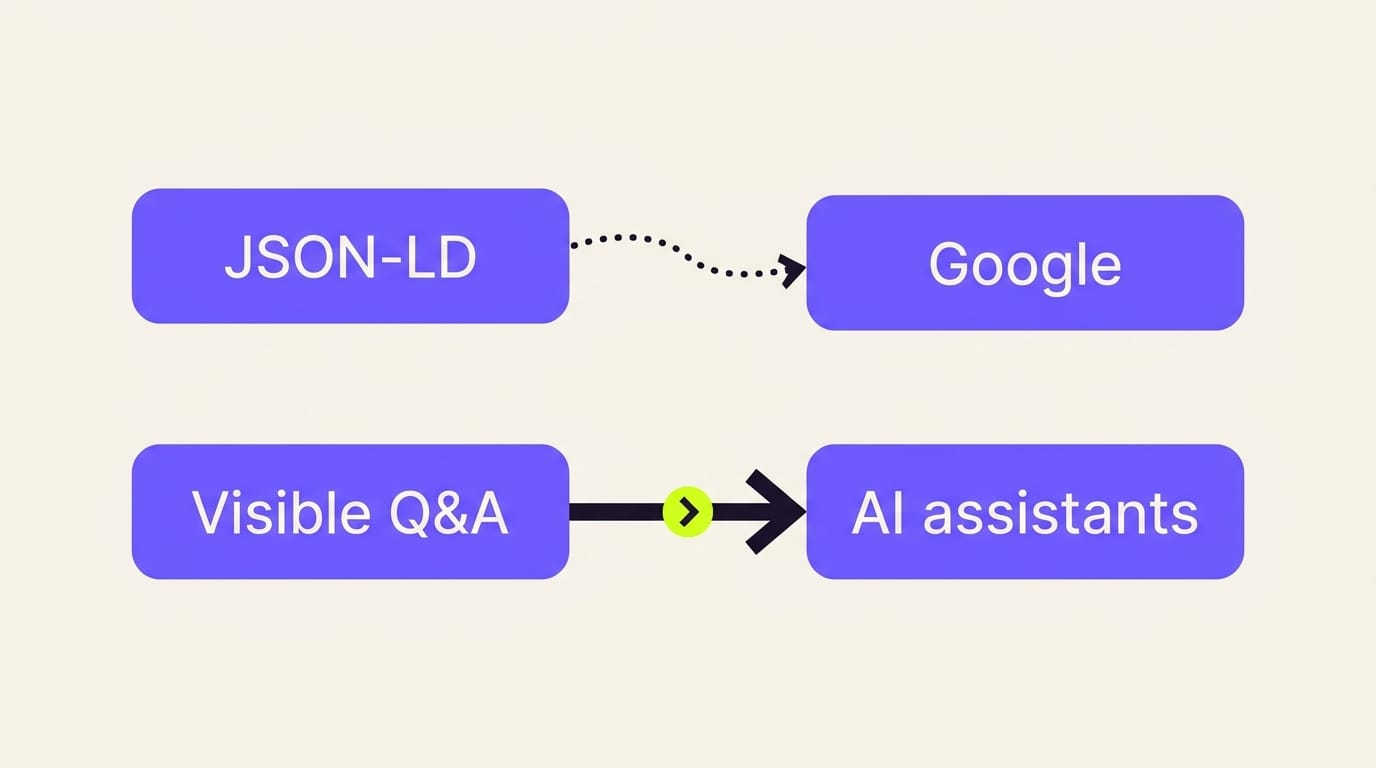
Layer one is indirect. Valid FAQ schema still feeds Google's understanding of your entities and relationships, which strengthens the organic rankings that AI systems lean on when they decide whom to trust. Most AI assistants ground their answers in conventional search results, so ranking well stays a backdoor into AI visibility. This is the layer the complete JSON-LD structured data guide is built around, and it is still the technical work with the highest return.
Layer two is direct. The visible questions and answers on your page, the ones your FAQ schema is meant to mirror, are what the model extracts and cites. The deprecation made this layer more important, not less.
It is worth being honest about how much FAQ schema alone buys you. In one analysis of AI citations, pages with schema were about 36% more likely to earn a citation, and Perplexity showed a strong correlation between valid schema and being cited. But domain authority outweighed schema by roughly three and a half to one, and ChatGPT showed no measurable lift at all. Schema helps. It does not replace being a source worth citing, a gap I dig into in how to actually get cited in an AI Overview.
How to implement FAQPage schema correctly
The FAQ schema mechanics are simple, and they have not changed. A FAQPage holds a mainEntity array of Question items. Each Question has a name, the full question text, and a single acceptedAnswer of type Answer with a text property holding the full answer. Answers may contain basic HTML such as links and lists.
Here is a minimal, valid example:
{
  "@context": "https://schema.org",
  "@type": "FAQPage",
  "mainEntity": [{
    "@type": "Question",
    "name": "Is FAQ schema still worth adding in 2026?",
    "acceptedAnswer": {
      "@type": "Answer",
      "text": "Yes, though not for Google rich results, which Google removed in May 2026. FAQPage schema still helps search and AI systems understand your page, and the visible question-and-answer format it mirrors is the easiest structure for ChatGPT, Perplexity, and AI Overviews to extract and cite."
    }
  }, {
    "@type": "Question",
    "name": "Where does FAQPage schema go?",
    "acceptedAnswer": {
      "@type": "Answer",
      "text": "In a JSON-LD script block on the page whose visible content contains the same questions and answers. Mark up only content a visitor can actually see on the page."
    }
  }]
}
Three rules from Google's documentation still apply, and in the dual-layer world they matter even more:
- Mark up only content that is visible on the page. This was always Google policy, and now it is the point: invisible answers cannot be the visible Q&A that AI extracts.
- Do not repeat the same FAQ across many pages. Mark up one instance.
- No ads, no promotional filler in the answers. Answer the question.
FAQPage vs QAPage
People reach for FAQPage when they should use QAPage, and the two are worth thirty seconds to tell apart. They look similar but signal very different things to search engines about who wrote the answers.
| FAQPage | QAPage | |
|---|---|---|
| Use when | You publish a list of questions and provide the single, definitive answer to each | A page poses one question and users submit competing answers |
| Typical page | Product FAQ, service explainer, a help article you authored | Forum thread, community Q&A, a support post with user replies |
| Who answers | The site owner | The community |
Pick the wrong one and you hand search engines a misleading signal about who authored your answers. If your page is a set of questions you ask and answer yourself, FAQPage is correct.
Writing answers that get pulled into AI responses
The work that moves citations now is content work, not code.
- Keep it to three to five questions per page. Past that, you dilute the page and give the model more room to grab a weaker answer.
- Write each answer to stand on its own in 50 to 300 words, across two to four sentences. That range lines up with the 150 to 300 word chunks that retrieval systems tend to slice content into, so an answer that depends on the one before it gets chopped in half.
- Lead with the answer, then explain. The model often keeps your first sentence and drops the rest, so make the first sentence the citable one.
- Use real questions your audience asks. Pull them from your search queries, your sales calls, the People Also Ask box. An FAQ that answers questions nobody asks gets cited by nobody.
Do this and the schema becomes almost a formality, because the page already reads like an answer key, which is what an answer engine wants. For the wider shift this sits inside, what answer engine optimization actually is lays out the full playbook.
When FAQ schema is not worth it
Skip it when the questions are filler. A block of invented questions bolted to the bottom of a page to "add schema" helps no one and can read as manipulative. Skip it when the answers are not genuinely on the page. And stop treating FAQ schema as a ranking trick, because since May 2026 there is no SERP feature left to win. The reasons to add it now are narrower: helping search and AI understand and extract your answers. Those hold up. They are just not the reason most guides still give. Among the structured data types still worth implementing in 2026, FAQPage is now a supporting player, not the headliner.
Where this leaves you
FAQ rich results are gone, and FAQ content is worth more than it was, which is the whole story in a sentence. The gap between those two facts is where the opportunity sits.
Keep your FAQPage markup, because it is cheap and it still feeds the systems that decide who ranks. Spend the effort that matters on the visible questions and answers: written tight, self-contained, and leading with the answer, because that is the text AI lifts into the responses your customers now read instead of clicking. The pages that win the next phase of search are the ones whose answers are easiest to quote, not the ones carrying the most schema.
Sources
- Changes to HowTo and FAQ rich results (Google Search Central, the August 2023 restriction)
- Google Drops FAQ Rich Results From Search (Search Engine Journal, the May 2026 removal and tooling timeline)
- FAQ (FAQPage, Question, Answer) structured data (Google Search Central documentation)
- FAQPage type (Schema.org)
- FAQ Schema for AI Answers: Does It Actually Get You Cited? (ZipTie, the Williams-Cook tokenization test, the dual-layer model, and citation correlations)
- The rise and fall of FAQ schema (Search Engine Land)