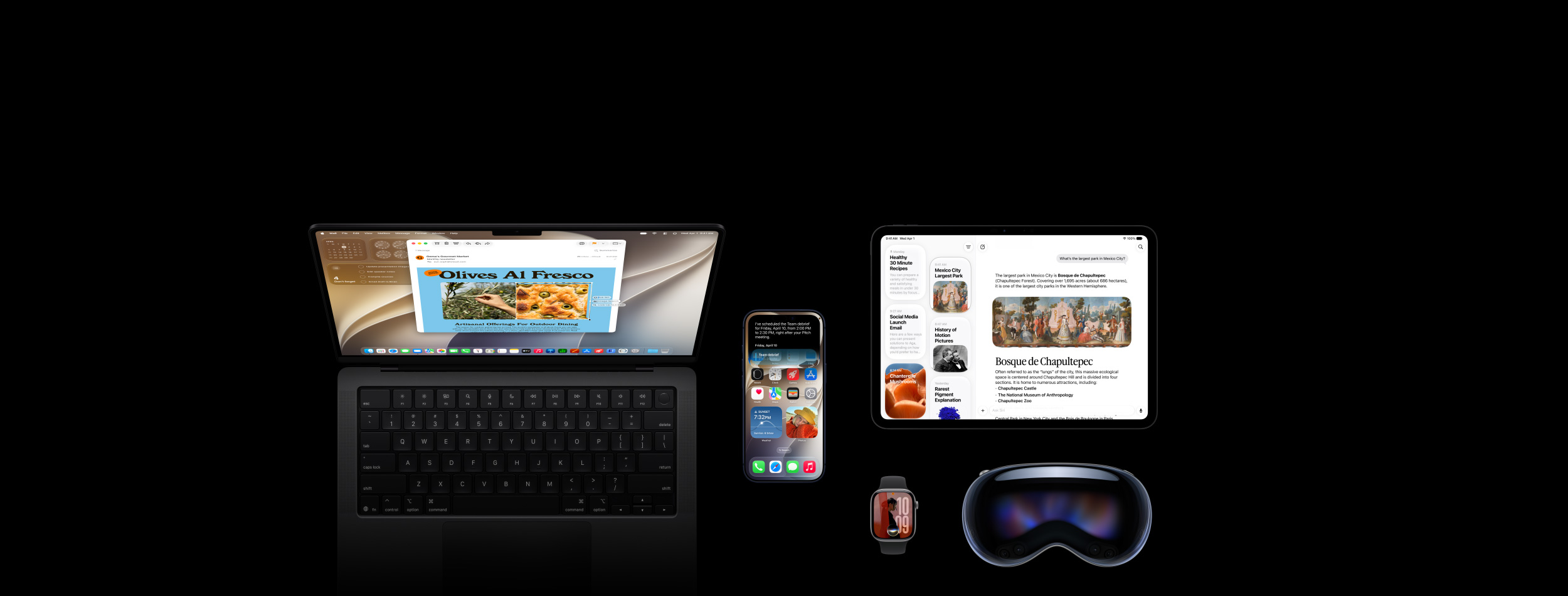
This morning, June 8, Apple opened WWDC 2026 and did the thing two years of "Apple is behind on AI" takes said it couldn't. It walked out at Apple Park, ran one of the shortest keynotes in WWDC history (a little over an hour), and rebuilt Siri from the studs into something it has never been before: an answer engine.
Apple's own name for it is Siri AI, and the framing is "a profoundly more capable and personal assistant." I watched the keynote at 1pm Eastern and then read every recap that landed in the hour after. Most of them cover the same surface area: new Siri, a fresh batch of operating systems, developer betas out today. The part I want to dig into is the one that changes your job if you own a website or an app, because a new answer engine just shipped to more than a billion iPhones and almost nobody is talking about how content gets surfaced inside it.
Think of this as the Apple companion to What Google I/O 2026 Just Changed. Same plot, different giant. Search is collapsing into an answer layer, and the link to your page is becoming one ingredient in a synthesized response instead of the destination people click.
The announcement, in 90 seconds
Here is what Apple showed at WWDC 2026, stripped of the keynote music:
- Siri AI, a rebuilt assistant that holds a real back-and-forth conversation, answers questions directly, generates text and images, reads files and documents, and understands personal context across your messages, email, and photos.
- A standalone Siri app on iPhone, iPad, and Mac that keeps your past conversations and syncs them across devices through iCloud, so a Siri answer is now something you can scroll back to, not a sentence that evaporates.
- Siri living inside the iPhone Dynamic Island (swipe down, press the side button, or say "Hey Siri") and inside Mac Spotlight, the Command-Space box that becomes a "Search or Ask" prompt.
- A rebuilt on-device search foundation under Spotlight, Photos, and Mail across iOS 27, iPadOS 27, and macOS 27.
- The "27" operating system lineup: iOS 27, iPadOS 27, macOS 27 (codenamed "Golden Gate"), watchOS 27, tvOS 27, and visionOS 27.
- New AI developer APIs, including a Core AI framework and a Foundation Models framework that now takes images as input, not just text.
Two things to keep straight on timing. Developer betas dropped today. The wider public will get a Siri AI beta in July, with full release arriving this fall in the iOS 27 cycle (Apple says "fall," the rest of us read "September, next to the iPhone 18 Pro"). So treat everything below as announced and previewed, not as shipping to your customers tonight.
If you want to see it for yourself, Apple posted the full keynote on its own YouTube channel and on Apple Developer. For thirteen minutes instead of ninety, CNET cut it down, and Engadget did a recap and Q&A.
Why this is an AEO story, not a gadget story
AEO is answer engine optimization: the practice of structuring your content so an AI system cites or repeats it when it answers a question, instead of just linking to it. For three years that conversation has been about Google's AI Overviews, ChatGPT, and Perplexity. Today it got a fourth front, and this one ships pre-installed on the most valuable install base in consumer tech.
The old Siri, the one from iOS 26, mostly punted. Ask it something hard and it either failed or handed you off to ChatGPT. Siri AI answers directly, in its own voice, using its own models, and it pulls from your on-device apps to do it. TechRadar's live coverage put it plainly: Siri will no longer hand your query to a third-party provider by default, and it can search core apps like Photos, Maps, and Mail to build an answer. The third-party models are still there as an optional fallback you can pick, but the default is now Apple answering you itself.
That is the whole reframe, so let me say it directly. Apple just put an answer engine on every iPhone, and the answer it gives is assembled, not retrieved. When a synthesized answer sits between your customer and your website, the question stops being "do I rank" and becomes "am I the source the answer is built from." If that sentence gives you a familiar, slightly nauseous feeling, it should. It is the exact shift we documented for Google in Citation is the new position one, now arriving on a second platform in the same quarter.
The new Apple answer surfaces
A year ago, "being found on an iPhone" meant two things: rank in Safari, and rank in the App Store. After today there are several more places where an answer gets assembled before anyone opens a browser. Each is a surface you can win, lose, or get quietly left out of.
- The Siri app. A real destination now, with history and follow-ups. People will start their questions here the way they currently open a chat app.
- The Dynamic Island. Siri is one swipe away from every screen, which means the assistant, not your home screen, becomes the first thing a user reaches for.
- Mac Spotlight. Command-Space used to launch apps and find files. Now it answers. MacRumors confirmed Siri's full conversational experience starts right inside the Spotlight prompt.
- Rebuilt Spotlight, Photos, and Mail search. Apple VP Stacey Ford described the problem in the keynote in words every user recognizes: "you search for something you know is there, but it just won't show up." So Apple rebuilt the foundation of search that powers all three. The new index covers a user's whole library and, per MacRumors, starts indexing new content almost immediately.
- Onscreen Awareness. Siri can see and act on what is currently on your screen, so the "query" can be a thing you are looking at rather than words you type.
Notice what these have in common. Four of the five never touch the open web. They retrieve from the device, from your apps, from your data. The classic SEO surface, Safari and the ten blue links, is still there, and Apple announced no change to it today. But it is now one lane on a road that grew several lanes, and most of the new lanes are fed by structured app content, not crawled web pages. That is the strategic shift hiding inside a friendly keynote demo.
Yes, Siri AI runs on Google's Gemini
Here is the detail that made the tech press sit up, and it matters for how you think about optimization. Apple's new assistant is not powered by a secret in-house breakthrough. In a joint statement, Apple and Google confirmed that the next generation of Apple Foundation Models is built on Google's Gemini models and cloud technology, and that those models help power Apple Intelligence features including the more personal Siri. Search Engine Journal and TechCrunch both corroborated the arrangement.
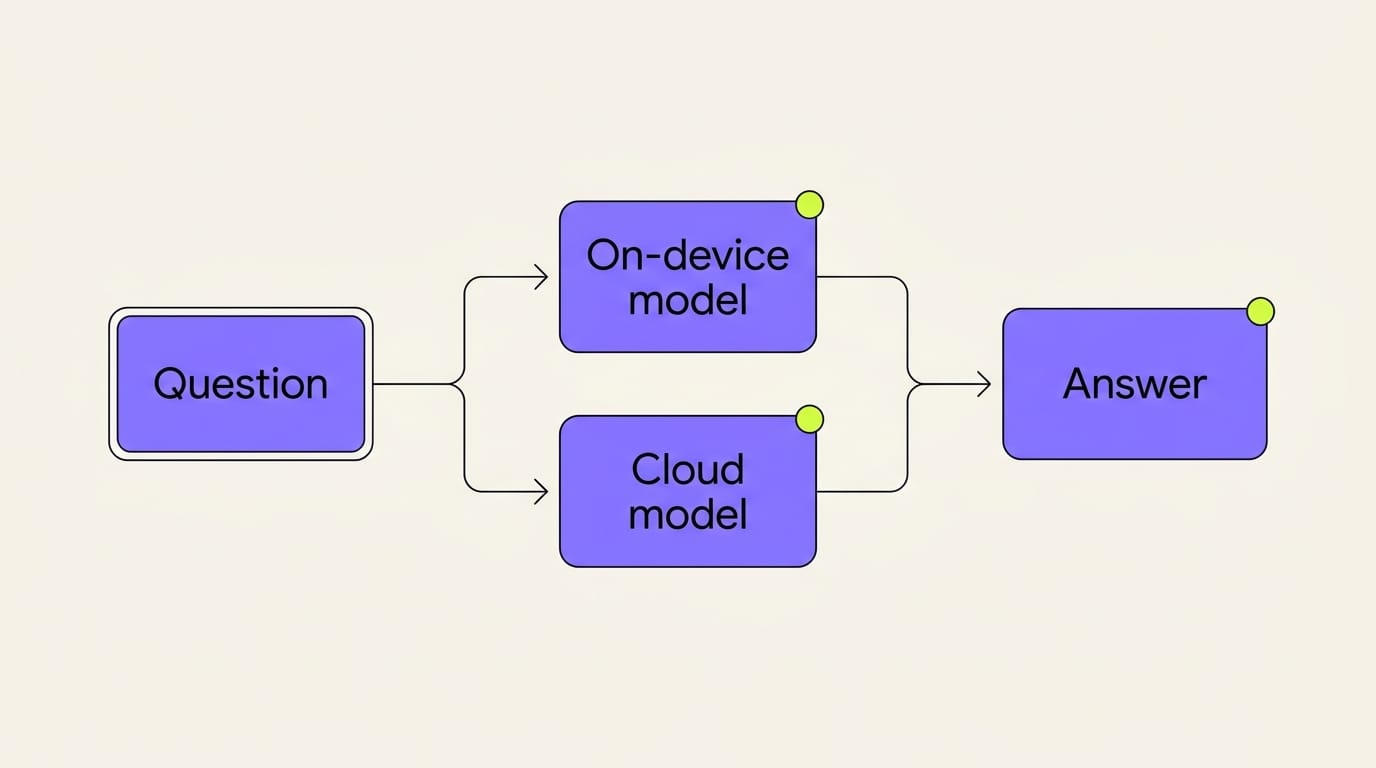
The mechanics, as reported by Bloomberg's Mark Gurman, are a three-tier routing system. Simple requests run on Apple's own on-device model. Harder reasoning routes to a custom Gemini model with around 1.2 trillion parameters running on Google Cloud, for a deal reportedly worth about a billion dollars a year. The on-device model is itself distilled from Gemini. Apple's marketing will keep saying "powered by Apple Intelligence," and that is technically true, so do not go around claiming Siri is just Gemini in a trench coat. The accurate version is that the engine assembling Apple's answers is, at the top tier, a frontier large language model from Google.
The reason this matters is that the optimization principles already work. The same content traits that earn a citation in a Gemini-powered AI Overview, clear declarative answers, named entities, stable facts, clean structure, are the traits that will earn a mention when Siri reaches for the web. You are not learning a new game from scratch, you are playing the game you should already be playing, on a device that just made it matter to a billion more people. We cover the mechanics of that game in How to actually get cited in an AI Overview.
The new door is App Intents, not a meta tag
For the SEO crowd, this is the uncomfortable part. The most important developer change today was not a web standard. It was Apple deepening App Intents, the framework that lets an app declare its actions and content to the system so Siri and Apple Intelligence can call them directly. Apple is steering developers away from the old SiriKit approach and toward App Intents as the way an app exposes what it can do. Alongside it came a new Core AI framework and Foundation Models updates, including image input and the ability to bring other models into your app.
Sit with what that implies. The way your product becomes an answer on an iPhone is increasingly not "Google crawls your marketing page." It is "your app declares a structured action that Siri can invoke." A recipe app that exposes a getRecipe intent, a booking app that exposes bookAppointment, a store that exposes searchProducts. The app that hands the assistant a clean menu of actions gets driven to. The app that makes Siri guess gets skipped. This is the Apple cousin of the agent-readable web we wrote about in WebMCP: the standard your site needs and the new traffic class of agents acting for users. Different framework, same direction: machines, not just humans, are now the audience for your structured content.
One honest flag here: the precise rules for how App Intents content gets ranked or selected by Siri AI are still being detailed in Apple's developer documentation as I write this, so verify the specifics there before you re-architect anything. The direction is clear even though the fine print is still being written.
What Apple did not say (the honest part)
A good news post tells you what is missing, not just what is shiny, and three gaps stand out.
Apple published no guidance for publishers. It confirmed Siri answers using Gemini, personal context, and your core apps. It did not say whether, or how, public web pages get sourced, ranked, or attributed inside a Siri answer. So every "how to optimize for Siri AI" tactic in this post, mine included, is informed inference from how comparable answer engines behave, not a documented Apple policy. Anyone selling you a guaranteed Siri-ranking checklist tonight is selling you fiction.
Safari and the App Store did not visibly change. I went looking specifically for a new Safari AI search experience, a default-search-engine shift, or an App Store ranking change, because those were the obvious places to expect one. None of them showed up today. The story this year is Siri, Spotlight, and App Intents, not a rewrite of Safari or the App Store algorithm. If that changes as betas land, I will update this post.
Siri AI is not coming to the EU or China at launch. Craig Federighi said on stage that he was "deeply disappointed that our EU users won't have Siri AI," and the crowd audibly booed. The EU exclusion traces to the Digital Markets Act, after the European Commission rejected Apple's proposed compliance approach. China is held up on separate regulatory work, which Apple framed as temporary. If your audience lives in either market, the new Apple answer surfaces do not reach them yet, and the EU timeline has no public resolution.
What to do about it
You cannot optimize for a beta that ships in the fall, but you can get your house in order so that when these surfaces light up, you are the source they pull from. Here is the work, on three timeframes.
This week
Read your homepage and top five pages the way an extractor would. For each, find the one declarative sentence that answers the page's core question and confirm it sits in the first 100 words. Answer engines lift cleanly from the top of a page. So put it there. If your answer is buried in paragraph six, you are handing the citation to whoever put theirs in paragraph one.
If you have an iOS app, schedule "adopt App Intents" into the next planning cycle and assign an owner. It is the single most valuable Apple-specific move available, and most of your competitors will sleep on it for a year.
This month
Rewrite your top converting pages so every H2 is a real question a customer would say out loud. "How much does a kitchen remodel cost in Austin" beats "Pricing." Conversational assistants match conversational questions, and Siri AI queries will skew long and spoken.
Tighten your structured data and entity footprint: clean schema markup, consistent business facts across the web, named authors with real bios, visible last-updated dates on anything factual. If "entity footprint" is a new phrase, start with What is Answer Engine Optimization. These are the signals an assembled answer trusts.
This year
Build one piece of original, citable research per quarter: your own data, your own numbers, things no competitor can paraphrase you out of. Commodity content is the first thing an answer engine summarizes into oblivion. Proprietary facts are what get named.
Build an audience you own that does not depend on any single platform's algorithm: an email list, a community, a newsletter. We made this case for Google in The 2026 Google SEO Reality, and Apple just doubled the reason. When a billion-device assistant can answer for you without sending a click, the relationships you own outright are the only traffic nobody can re-route.
The honest version
I think Apple shipped something real today, and I think it changes less for you tomorrow than the keynote implies and more for you next year than most people will admit. The accurate read: a capable answer engine is now native to the iPhone, fed mostly by on-device apps and a Gemini brain, with the open web in a supporting role and no rulebook for publishers yet. The wishful read, the one to resist, is that this is just a better voice assistant you can safely ignore.
You cannot ignore it, but you also cannot chase it with last decade's checklist. The brands that win the Apple answer layer will be the ones doing the boring fundamentals, plus a citation-engineering layer, plus, if they have an app, App Intents adoption while it is still a competitive edge instead of table stakes. That is the same prescription we keep arriving at from every direction, because the platforms keep proving it.
If your site or app has not been audited through this lens, that is the thing to fix first. Everything above is downstream of knowing where you really stand.
Sources
- Apple introduces Siri AI (Apple Newsroom, June 8, 2026)
- WWDC 2026 keynote, full video (Apple, official YouTube) and on Apple Developer
- Joint statement from Google and Apple on Gemini (Google, June 8, 2026)
- Everything announced at WWDC 2026 (TechCrunch)
- Apple says it fixed search for Mail and Photos (TechCrunch)
- Apple announces Siri AI and Apple rebuilds search infrastructure (MacRumors)
- Siri AI not available in the EU or China (MacRumors)
- Apple selects Google's Gemini for the new Siri (Search Engine Journal)
- Everything announced at Apple's WWDC 2026 keynote (Engadget) and the live recap and Q&A
- WWDC 2026: everything revealed in 13 minutes (CNET)