
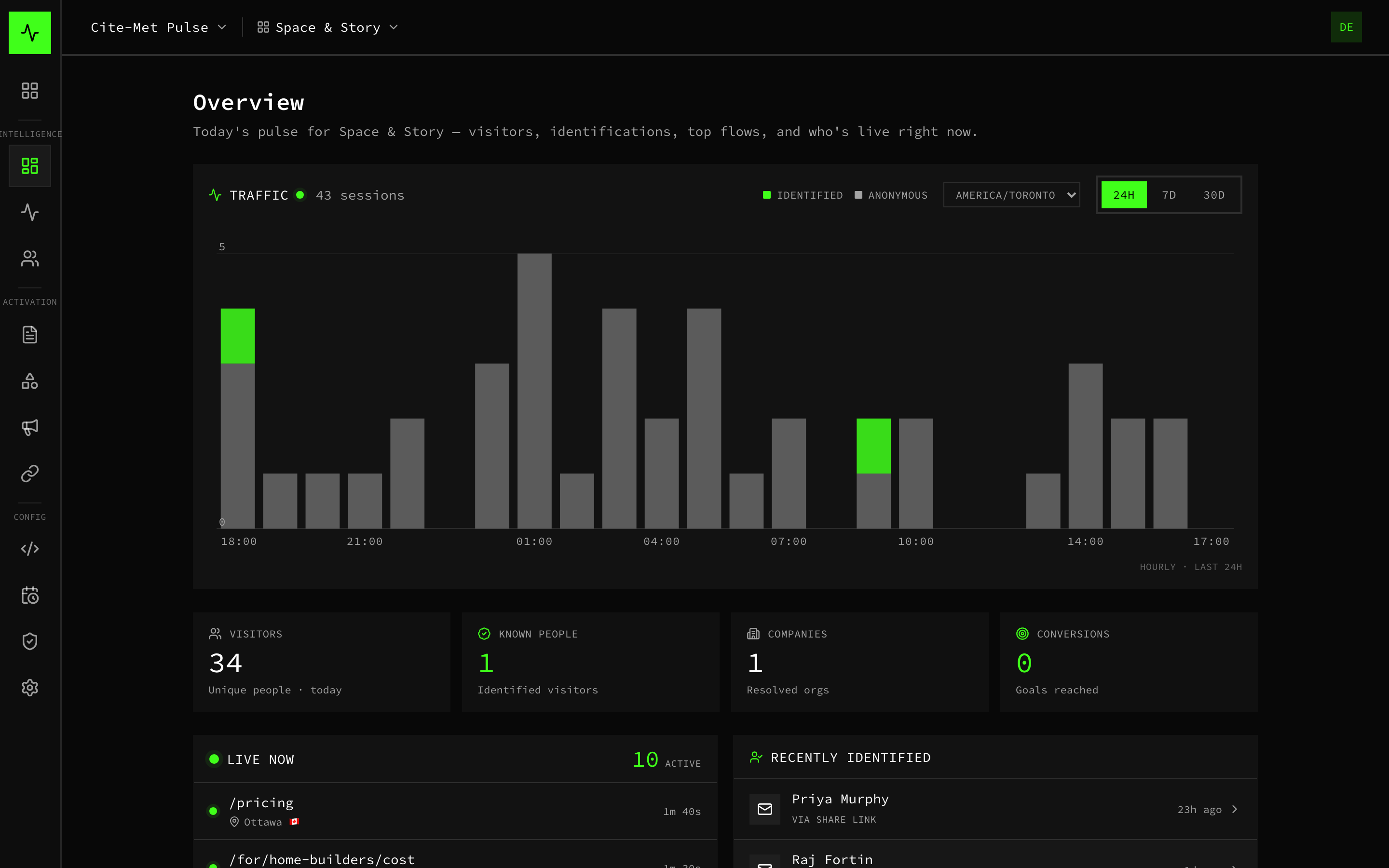
Getting cited by AI is the hard part, and once you have done the work, the traffic arrives. People ask ChatGPT for the best home builder in their area, or ask Perplexity to compare two options, and they land on your site already halfway convinced. On our own properties, 32 percent of traffic now comes from AI engines rather than classical search. The AEO work pays off.
And then, for most businesses, nothing. That hard-won AI traffic lands, reads, and leaves as anonymously as any other visitor. You proved you can get found in the channel everyone is scrambling toward, and you still cannot see who showed up. Getting found is half the loop. This is the case for the other half.
The channel changed. The blind spot didn't.
We have written at length about how buyers stopped clicking ten blue links and started reading the answer the machine hands them, in the death of the blue link and the fuller breakdown in SEO vs AEO vs GEO. The upshot is that AI search sends warmer traffic than classical search, because the person arrives already filtered by the model's recommendation. Someone who lands after ChatGPT named you is closer to buying than someone who clicked a ranked link out of ten.
That makes the anonymity worse, not better. Losing an anonymous tire-kicker from a cold Google query is cheap. Losing an anonymous, AI-qualified, ready-to-talk visitor because you had no way to know they were there is expensive. The channel got better and the blind spot stayed exactly the same size.
Why AEO and identity are the same project
It is tempting to treat "get found" and "capture leads" as two separate budgets run by two separate teams. On an AI-search site they are one project, because the value of a citation is only realized at capture.
Think of it as a loop with four stages. Found: AEO earns the citation and the click, or the direct visit, from an AI engine. Identified: the anonymous session resolves to a company or a person. Captured: a form or a booking turns that person into a lead. Booked: the lead becomes a conversation on your calendar. Break any link and the chain fails. An agency that sells you the first stage and leaves the other three to chance is selling you traffic, not pipeline, and calling the difference your problem.
This is also why measuring AI-referral traffic in aggregate, while useful, is not enough. Knowing that AI sends you 32 percent of your visits proves the channel works. It does not tell you that a returning builder from that channel keeps checking your model pricing. The aggregate number is the scoreboard. The identity is the play.
What closing the loop looks like
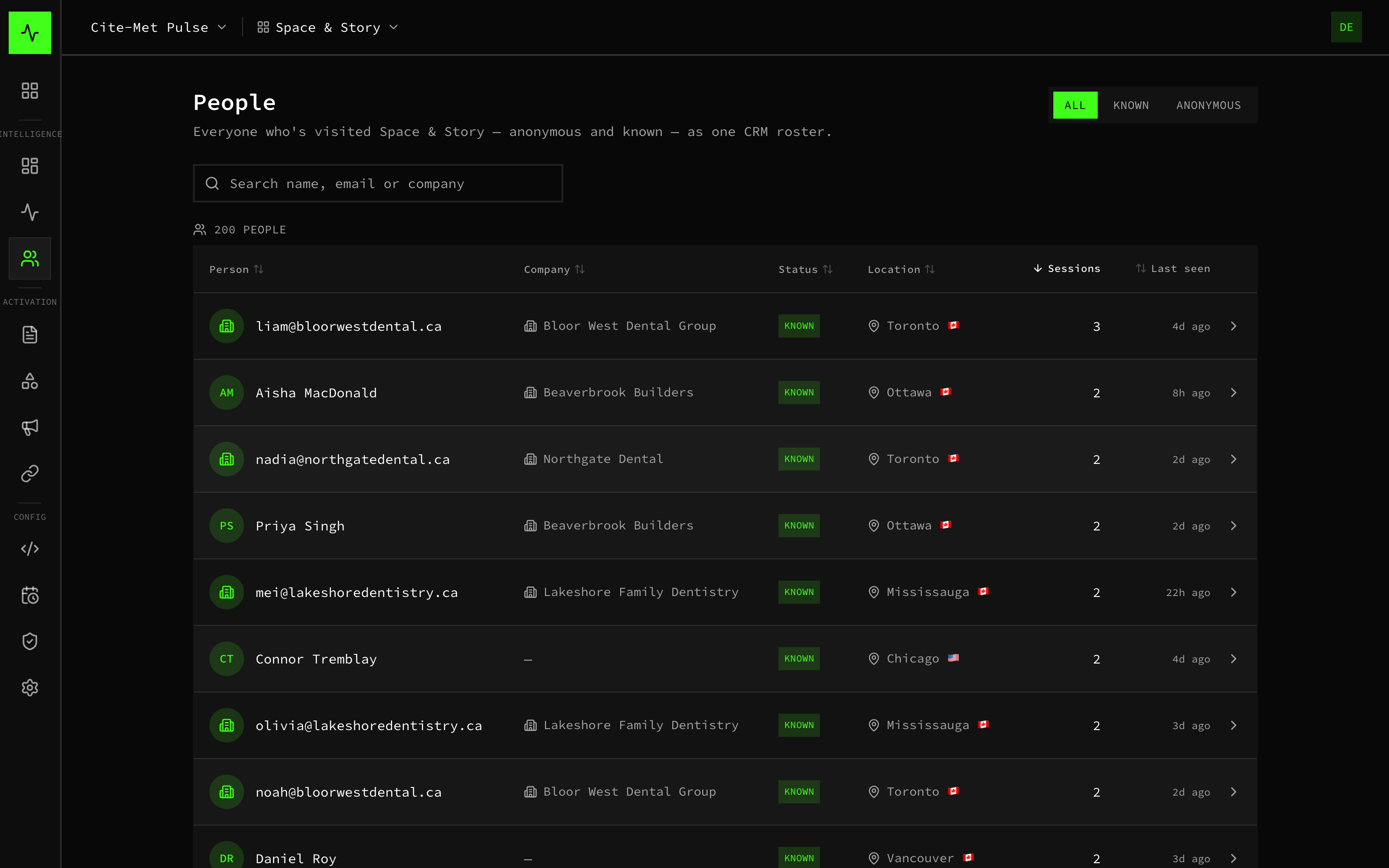
Concretely, closing the loop means the AI-referred visitor stops being a number and becomes a record. You see that they entered on the blog post an assistant cited, browsed your service pages, compared pricing, and came back twice. You see the company they belong to. And when they are ready, the form and the booker are right there, tied to that whole journey, so the conversation starts warm instead of cold.
None of this replaces the AEO work. It completes it. The schema, the answer-shaped content, the entity authority that gets you cited are still the engine. Identity and capture are the part that makes the engine pull revenue instead of just traffic.
The part that makes it defensible
There is a strategic reason to keep the identity layer on infrastructure you own rather than a vendor's cloud, and it goes beyond privacy. The data about who your AI-referred buyers are, what they read, and what converts them is the sharpest signal you have for what content to build next. Handing that to a third party, or worse into a model that also serves your competitors, gives away the one asset your AEO work is generating. Kept first-party and deterministic, it compounds: every identified visitor teaches you what the next month of content should target.
That is the whole thesis behind Cite-Met Pulse. We get clients found, then we show them who showed up and capture them, on data they own, and we include it on the Growth and Authority plans rather than billing it as a separate tool. If you are already earning AI traffic and cannot see who it is, the free audit is where we show you what you are missing.
The honest summary
AEO is winning you a warmer channel than search ever was, which makes the anonymity of that traffic more costly, not less. Getting found, identifying, capturing, and booking are one loop, and selling only the first stage is selling traffic dressed up as pipeline. Complete the loop, keep the identity data first-party so it compounds into your next content, and the citations you worked for finally turn into conversations.