
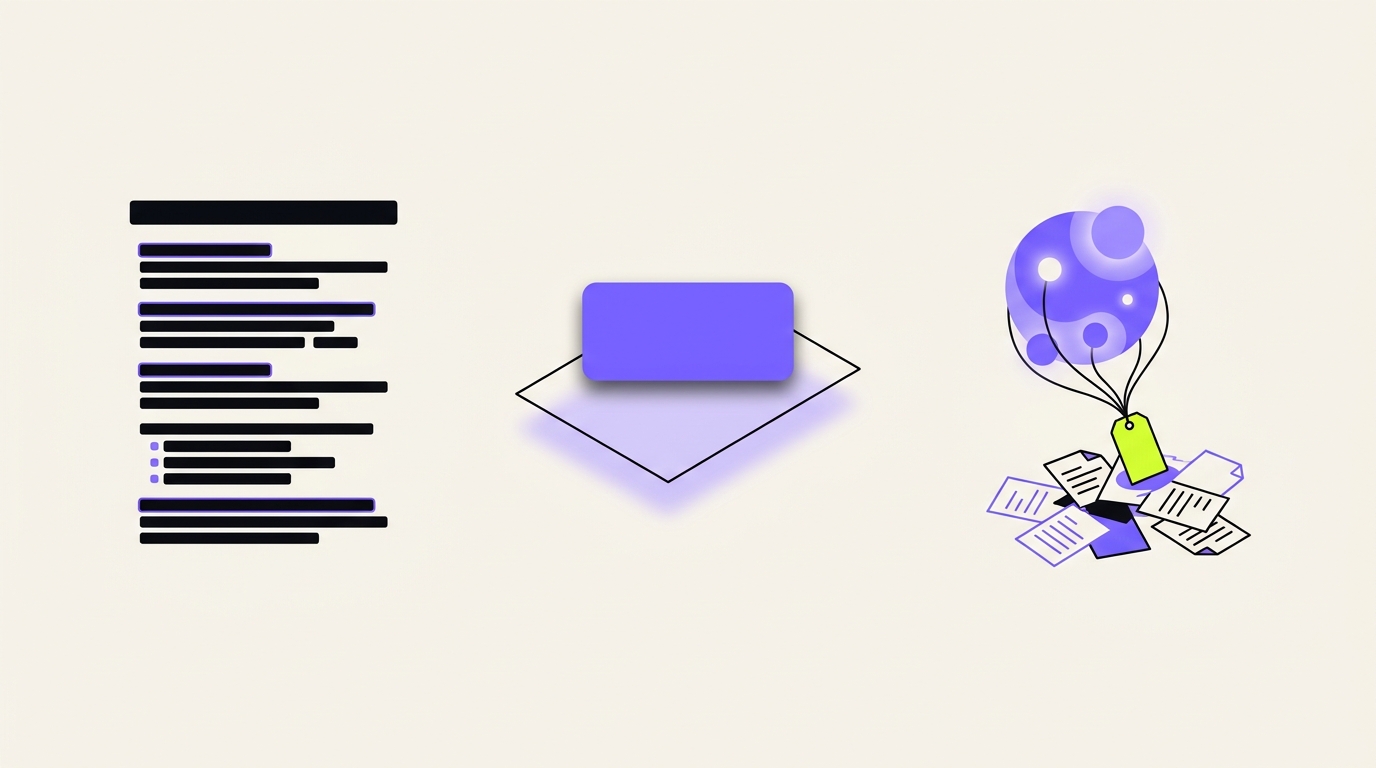
SEO, AEO, and GEO are three different jobs that happen to share three-letter names. SEO earns the click, AEO wins the answer box, and GEO earns a citation inside an answer the AI writes for you. The work overlaps, but each one is won on different terms, and in 2026 the channel moving the most pipeline is the one most agencies still can't measure.
We run a studio that builds for all three. We also run cite-met.com, our own tracker for where AI engines pull our clients' brands into answers. So this is not another listicle that defines the acronyms and tells you to "use them all together." It is what we measured. It is where the three disciplines diverge, and which one to fund first.
SEO, AEO, and GEO, defined without the hype
Search engine optimization (SEO) is the old discipline. You publish pages, earn links, prove relevance and authority, and Google rewards you with a ranked position. The prize is a click. Twenty years of playbooks, tooling, and agency retainers sit on top of this, and it still works for high-intent queries where people want to choose for themselves.
Answer engine optimization (AEO) is the practice of structuring content so a machine can lift a clean, direct answer out of it. The prize is being the answer: the featured snippet, the voice result, the box at the top of an AI Overview. AEO is mostly about format. You write the question the way a person asks it, then answer it in the first two sentences. You mark it up so the parser never has to guess what it's reading.
Generative engine optimization (GEO) is newer, and it is the one people muddle. The term comes from a 2023 Princeton and Georgia Tech research paper that coined "generative engine optimization" and built the first benchmark for it. GEO is about earning your way into a synthesized answer, the kind an engine like ChatGPT, Perplexity, Claude, or Google's AI mode assembles from many sources at once. The prize is the citation: a line in a narrative the model wrote, with your brand named as where it came from. You do not own a position or a snippet outright here. You earn the mention.
Here is the fastest way to hold the three apart:
| SEO | AEO | GEO | |
|---|---|---|---|
| Optimizes for | Ranked links | Direct answers | Cited mentions in AI answers |
| Where you see it | Google & Bing results | Snippets, voice, AI Overviews | ChatGPT, Perplexity, Claude, Gemini |
| Unit of victory | A click | Being the answer | Being a named source |
| Primary signal | Links, relevance, authority | Structured data, clean Q&A format | Entity consistency, earned mentions, quotable specifics |
| How you measure it | Rank, organic clicks, CTR | Snippet ownership, AI Overview presence | Citation share, AI-referral traffic |
| Trajectory in 2026 | Clicks declining | Contested | Fastest-growing, least measured |
If a definition you read this week told you these are all the same thing, it was half right. They share a goal: get found. They diverge completely on the work, and that is the part that decides where your money goes.
GEO vs AEO: the distinction that changes what you build
Most articles on this topic hedge here. They say AEO and GEO are roughly the same thing and move on. That hedge is comfortable and useless, because the two disciplines ask you to build different things.
AEO is about formatting an answer the machine can lift cleanly. You own the page and control the words. The engine reads your structured Q&A, decides it is the best direct response, and shows it more or less verbatim. Win it and you win a specific, ownable surface.
GEO is about earning a mention in an answer you do not control and cannot see in advance. The model is not lifting your paragraph. It assembles a fresh narrative from your site, a Reddit thread, a journalist's review, a competitor or two, and a comparison page. Then it decides whether your brand is solid enough to name as a source. You do not own that surface, you earn standing on it.
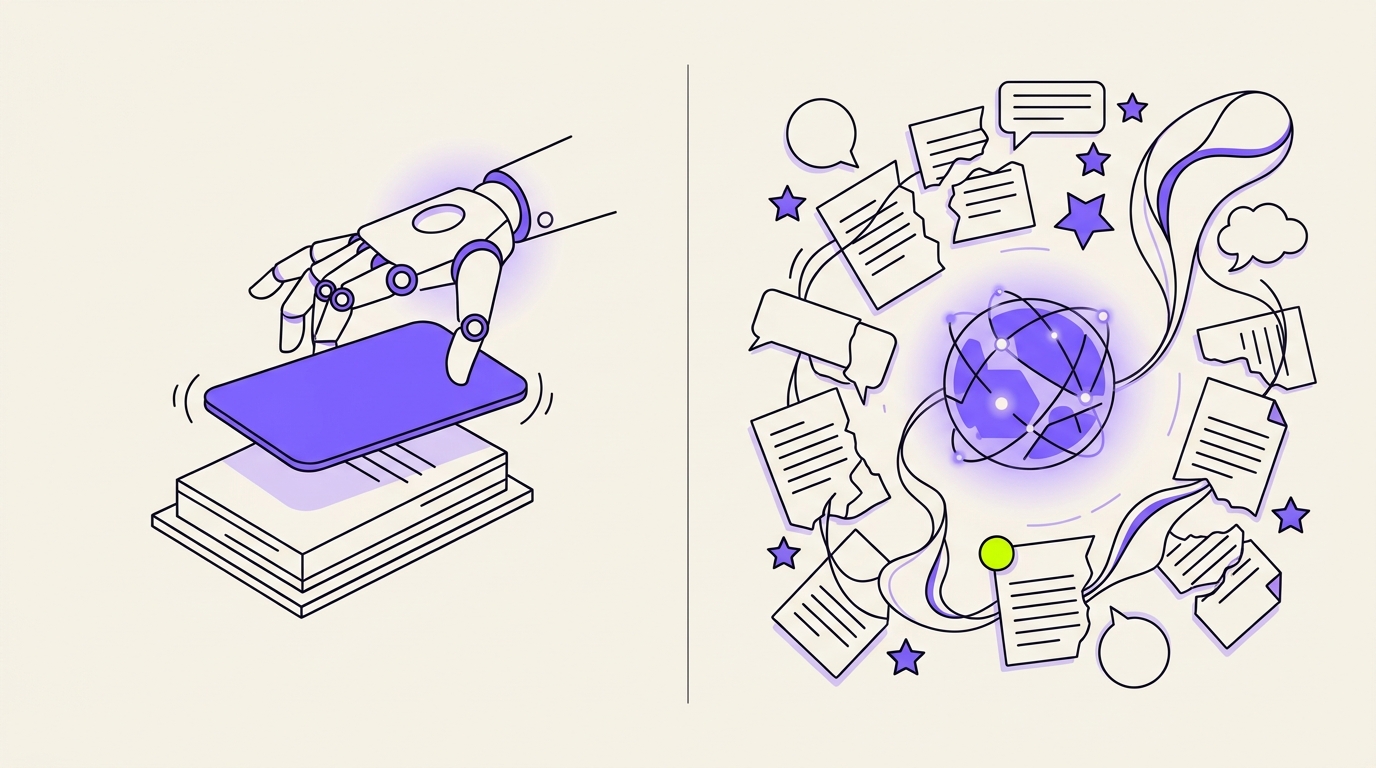
That difference is operational, not academic. The answer-box work lives on your own pages: schema markup, FAQ blocks, direct first-sentence answers, clean semantic HTML. The citation work mostly lives off your site. The same Princeton study found that adding cited statistics and direct quotations to a page lifted its visibility in generative answers by 30 to 40 percent. Models reward sources that read as evidence rather than marketing. Being quotable, and being mentioned where the model already reads, matters more than any tag you can add to your own template.
So when someone tells you the two are the same discipline, ask them one question: does the tactic live on my page or off it? Answer-box work is the page. Citation work is the page plus everywhere your name gets earned. You need both, and you build them differently. Pretending they are identical is how agencies sell you formatting work and bill it as an AI strategy.
What we measured: where our own citations actually come from
Every guide on this topic cites the same third-party numbers. Almost none of them measured anything. We did, because we had to. Cite-met.com exists to tell our clients whether the AI-search work is paying off, and the first site we pointed it at was our own.
As of mid-2026, 32 percent of the traffic reaching spaceandstory.co arrives from AI engines rather than classical search. Those are not impressions. Those are people, landing on the site, after an assistant named us in an answer. A year earlier that number was a rounding error. For our properties the shift has already happened. The wider data agrees: roughly 37 percent of consumers now start a search with an AI tool, and AI Overviews appear on close to half of all tracked queries.
The pattern underneath the citations is the part worth internalizing. Muck Rack analyzed more than 25 million cited links and found that 84 percent of AI citations come from earned media: journalism, third-party coverage, and independent mentions. Paid placements accounted for 0.3 percent. That number has held between 82 and 89 percent across every edition of the study since 2025. It reflects how these systems decide who to trust, not a one-off quirk.
Read that against the citation-versus-answer-box split and it lands hard. You can format your own pages perfectly and still be invisible in generative answers. The engine weighs what other people say about you far more than what you say about yourself. The studios winning AI citations are rarely the ones with the cleverest schema. They are the ones cited, quoted, and discussed in places the model already trusts.
How to optimize for each, and where they overlap
The good news is that the three disciplines share a spine. Do the foundational work well and you serve all of them at once. Here is how the work splits across the three layers.
The foundation is classical SEO. That means fast, crawlable, semantic pages, real internal linking, and content that answers a genuine query better than the page currently ranking. None of this is obsolete, because AI engines lean on the same signals to decide which pages are worth reading at all. If your site is a slow, plugin-choked template, you lose all three games before they start, which is the case we made in why AI-native architecture beats WordPress bloat.
The format layer is answer-box optimization. You phrase headings as the questions people ask out loud. You answer in the first sentence or two, then expand and add FAQPage, HowTo, and Article structured data so the parser knows what it is looking at. This is the most mechanical of the three and the easiest to get right, and it is where a clean JSON-LD entity graph earns its keep. A compact, correct block beats a sprawling, broken one:
{
  "@context": "https://schema.org",
  "@type": "FAQPage",
  "mainEntity": [{
    "@type": "Question",
    "name": "Is GEO just AEO with a different name?",
    "acceptedAnswer": {
      "@type": "Answer",
      "text": "No. AEO formats an answer on a page you own; GEO earns a citation in an answer the AI assembles from many sources."
    }
  }]
}
The earning layer is GEO, and it is the one you cannot fake with markup. You keep your brand's facts consistent everywhere they appear, so the model resolves you to one confident entity instead of three fuzzy ones. You put real statistics and quotable specifics into your content, because evidence travels into synthesized answers and adjectives do not. And you earn genuine third-party mentions, since that is where 84 percent of citations originate. This work looks more like credibility-building than like traditional optimization, which is why most agencies are bad at it. We went deep on the tactics in how to get cited by ChatGPT, Gemini, and Perplexity.
The overlap is the point. Schema you add for the answer box also helps a generative engine parse you for citations, and the authority you build for citations also lifts classical rankings. You are not running three campaigns. You are running one well-built site with three scoreboards.
Which one to fund first
If you have an unlimited budget, do everything. You do not, so here is the order we recommend to clients, and the reasoning behind it.

Fund the SEO foundation first, because it is load-bearing for the other two and because it is the cheapest to fix. A site that crawls clean and loads fast is the price of admission to every engine, classical or generative. Skip it and the rest is decoration on a building with no foundation.
Fund AEO second, because it is fast, mechanical, and ownable. Structured data and direct-answer formatting are a few weeks of work with a clear payoff, and they double as the parsing layer that generative engines need anyway. This is the highest return per dollar in the short term.
Fund GEO third in sequence, but treat it as the long game, because it is where the traffic is shifting and because it compounds. Earned mentions and entity authority take months rather than weeks. They are also the hardest thing for a competitor to copy, which makes them the most durable advantage of the three. The brands starting now will own citations that latecomers spend years trying to earn.
For a local service business, say a home builder or a clinic or a law firm, the honest version is simpler still. Get the foundation and the schema right in the first month. Then spend the next six earning the genuine local coverage and reviews that put you in the AI answer when someone asks for the best option in your city.
How to know if it's working
The measurement gap is the real reason GEO feels like guesswork. You can check a Google ranking in seconds. Checking whether ChatGPT names your brand is harder, and most teams never do, which is how an agency keeps billing for "AI optimization" that produces nothing.
Three things are worth tracking. The first is AI-referral traffic. Segment the visits arriving from ChatGPT, Perplexity, and the rest in your analytics, then watch the trend rather than the daily number. The second is citation share. Run the prompts your buyers type into an assistant, and record whether you appear, how you are described, and who shows up instead of you. The third is entity health: ask an engine what your brand is and see whether the answer is correct, confident, and consistent. A vague or wrong answer is a problem you can fix.
This is the loop cite-met automates for our clients, but you can run a lighter version by hand with a spreadsheet and fifteen minutes a week. The point is to measure the citation, not just the ranking, because the citation is where the buyers now are. If your current reports only show keyword positions, you are flying blind on the channel that grew the most this year. That is the gap our free AEO and AI-search audit was built to close.
The honest summary
SEO, AEO, and GEO are not rivals and they are not synonyms. SEO keeps you in the game, AEO wins you the answer box, and GEO earns you the citation that increasingly decides which brands a buyer ever hears about. The work overlaps enough that one well-built site can serve all three, and it diverges enough that you have to be deliberate about where the next dollar goes.
The studios that win the next few years will be the ones who stopped arguing about the acronyms and started measuring the citations. If you want to see where your site stands across all three today, that is exactly what we built the audit to show you.