
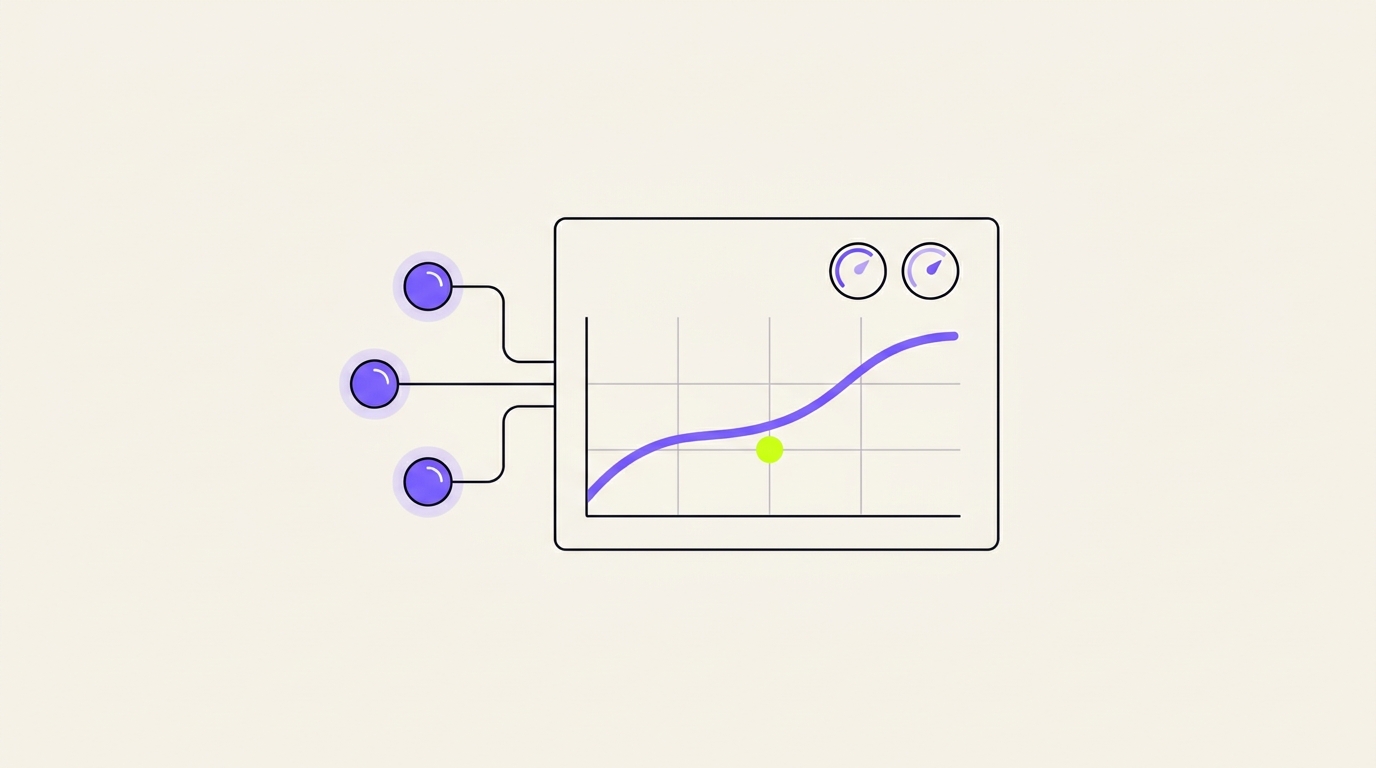
Measuring AI search visibility means tracking three things: how much traffic AI engines send you, how often they cite your brand versus your competitors, and whether they describe you accurately. None of it shows up in a normal Google rankings report. That is the core problem. Most teams are flying blind on the channel that grew fastest this year. You can fix that this week, for free, with a spreadsheet and a fixed set of prompts.
We had to solve AI search visibility for our own clients, which is why we built cite-met.com to track it automatically. The framework underneath the tool is simple, though. You can run it by hand, and you should understand it before you pay anyone for a dashboard. Below is what to measure, how to measure it without spending a dollar, and when a tool finally earns its keep.
The three numbers that matter
Most AI search visibility reports drown you in metrics. Strip it back to three.
AI-referral traffic. This is the cleanest signal, because it is real people landing on your site after an assistant named you. Your analytics already capture it. You just have to segment it. Filter sessions by source for ChatGPT, Perplexity, Gemini, the Google AI surfaces, and Claude, then watch the trend over weeks rather than the number on any given day. When this line climbs, your generative engine optimization is working. If you want the mechanics behind that, we covered them in what generative engine optimization is.
Citation share. Referral traffic tells you that you were cited. Citation share tells you how often you win versus everyone else competing for the same answer. Pick the questions your buyers ask an assistant, run them, and record whether your brand appears, who appears instead, and how you are positioned. The percentage of those answers that name you, measured against your competitors, is your share of AI voice. It is the closest thing GEO has to a keyword ranking, and the number that tells you whether you are gaining ground or losing it.
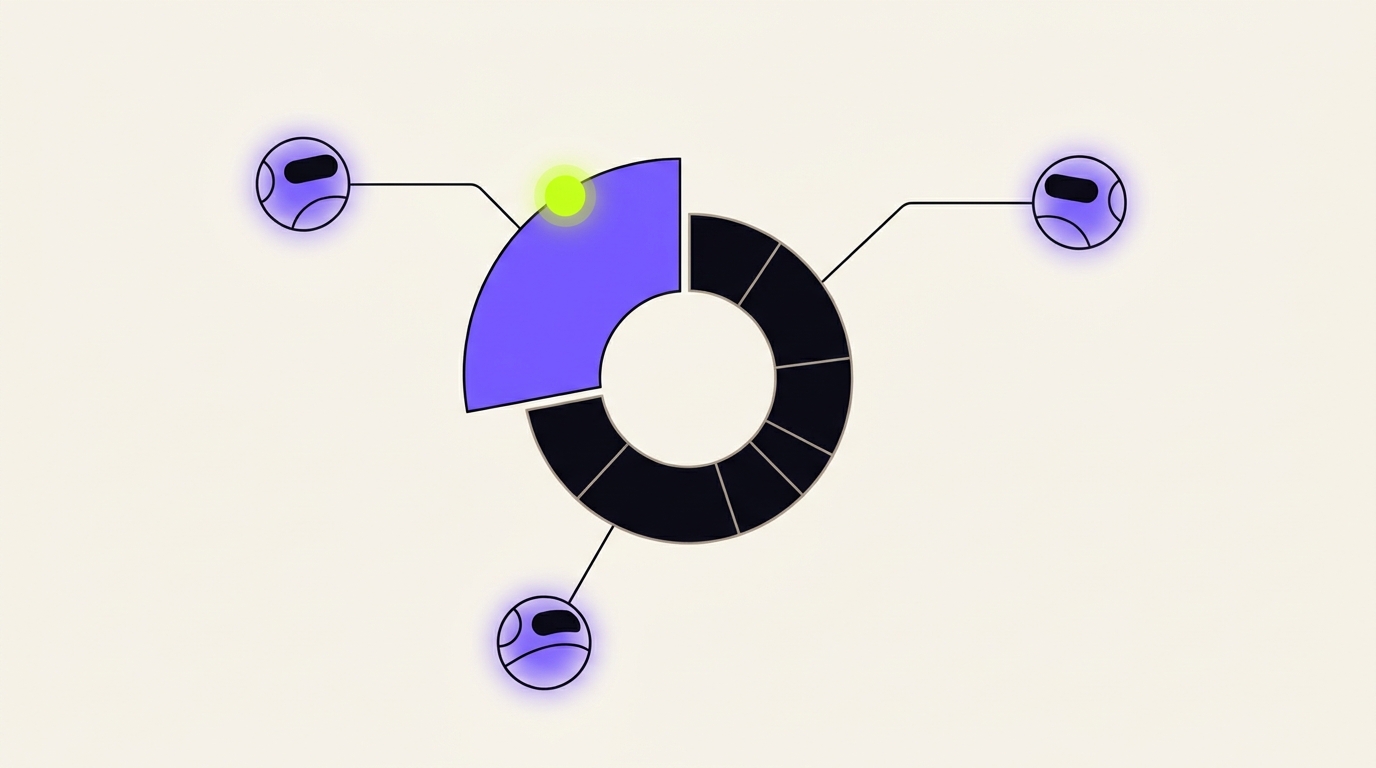
Entity health. The last one is qualitative and easy to skip, which is a mistake. Ask an engine "what is [your brand]" and "is [your brand] any good," then read the answer critically for whether it is correct, confident, and consistent across engines. A vague, hedged, or wrong answer is not bad luck. It is a fixable signal that your facts are scattered or thin, and it quietly suppresses every other number on this list.
The free way to start measuring AI search visibility
You do not need software to begin. You need a list of prompts and the discipline to run them on a schedule.
Build a prompt set of ten to twenty questions a real buyer would ask, phrased in full sentences, the way people talk to an assistant. Mix the categories so you cover the range. Use a few that name your space ("best custom home builder near me"), a few that lead with the problem ("how much does a net-zero home cost in Ontario"), and a few that name you directly ("is [your brand] reputable"). Once a week, run every prompt through ChatGPT, Perplexity, and Google's AI mode. Log three columns: were you mentioned, were you cited with a link, and who showed up instead.
After a month you will have something no rankings report gives you: a trendline of your share of AI voice, the queries where competitors are beating you, and a record of how the engines describe you in their own words. That is enough to direct real work. The prompts where a rival keeps winning are the pages and mentions you need to go earn. The tactics for earning them are the same ones in how to get cited by ChatGPT, Gemini, and Perplexity.
The whole system costs fifteen minutes a week. It will tell you more than most paid dashboards do in their first month. Start here before you buy anything.
When a tool earns its keep
The manual method breaks down at scale. Once you are tracking dozens of prompts across five engines, watching competitors, and reporting to someone who wants weekly trendlines, the spreadsheet becomes the bottleneck. That is when a dedicated tracker pays off.
Several platforms handle this well, and they mostly work the same way. They send your prompts to the engines on a schedule, parse the answers for mentions and citations, and chart your share of voice over time. Otterly, Keyword.com, SE Ranking, and HubSpot's AEO tooling all live in this category, and any of them beats a spreadsheet once volume climbs. Our own cite-met.com exists because we needed citation tracking wired into the audits and builds we ship for clients, so the measurement and the fixes sit in one place.
The right tool is the one that matches how you already work. The wrong move is buying any of them before you understand the three numbers they report, because then you cannot tell a real trend from ordinary model noise.
What good looks like
Benchmarks help, so here is a real one. As of mid-2026, AI engines send 32 percent of the traffic reaching our own site, up from a rounding error a year earlier. That is the trajectory a site doing the work should expect. It rarely arrives as one dramatic jump. It is a line that bends upward over two or three quarters as the earned mentions and the clean structure compound.
The macro backdrop is why this is worth your attention now rather than next year. Gartner projects that traditional search volume will fall 25 percent by 2026 as AI assistants absorb the queries. A Muck Rack analysis of 25 million cited links found that 84 percent of AI citations come from earned media. The traffic is moving, and it is being awarded on reputation. Measuring your share of AI search visibility is how you find out whether your reputation is keeping up, or slipping behind.
The mistakes that waste the effort
A few traps make the whole exercise useless. Watching the daily number instead of the weekly trend turns normal model variance into panic. Tracking mentions but not citations tells you that you are being talked about, without telling you whether anyone can click through. And measuring yourself with no competitor baseline produces a number with no meaning, because share of voice only makes sense relative to the brands you keep losing answers to. Avoid those three and your measurement will point at work worth doing.
If you would rather not stand up the whole system by hand, our free AI-search audit runs your site against the SEO, AEO, and GEO checklist and reports where you stand today, including the prompts where competitors are winning the answer. It is the fastest way to turn "we should probably measure this" into a list you can act on this week.